Translate

Thursday, 10 September 2015

Strombus coronatus (Defrance, 1827) Fossil Cyprus


Strombus coronatus is an extinct species of fossil sea snail from the Pliocene (5-2 million years ago), a conch, a marine gastropod mollusk in the family Strombidae, the conchs.
Persististrombus coronatus has a shell reaching a length of 100–120 millimetres (3.9–4.7 in), but some specimen may attain sizes up to 155 mm. The large-sized light brown shells are heavy, very thick at the right edge, and show long protuberances. These molluscs were epifaunal omnivore-grazers. They lived in shallow water on sandy seabeds, in warm and tropical seas.
In the Miocene, the species is a West African element, which later invaded the Mediterranean Region. It disappears from the Mediterranean Sea completely with the onset of the Late Pliocene cooling.
During the early Pliocene warming, the species is recorded from Portugal, Spain, France, Italy, Greece, Turkey, Syria, Libya, Tunisia, Morocco and the Canary Islands. It is also present in the Miocene of Algeria, Greece, Libya, Romania, Somalia and in the Oligocene of Hungary.From Wikipedia, the free encyclopedia


.


Photos Nicosia  by George Konstantinou
The biggest Strombus coronatus found in Cyprus.found by George Tornatiis near Nicosia


Wednesday, 9 September 2015

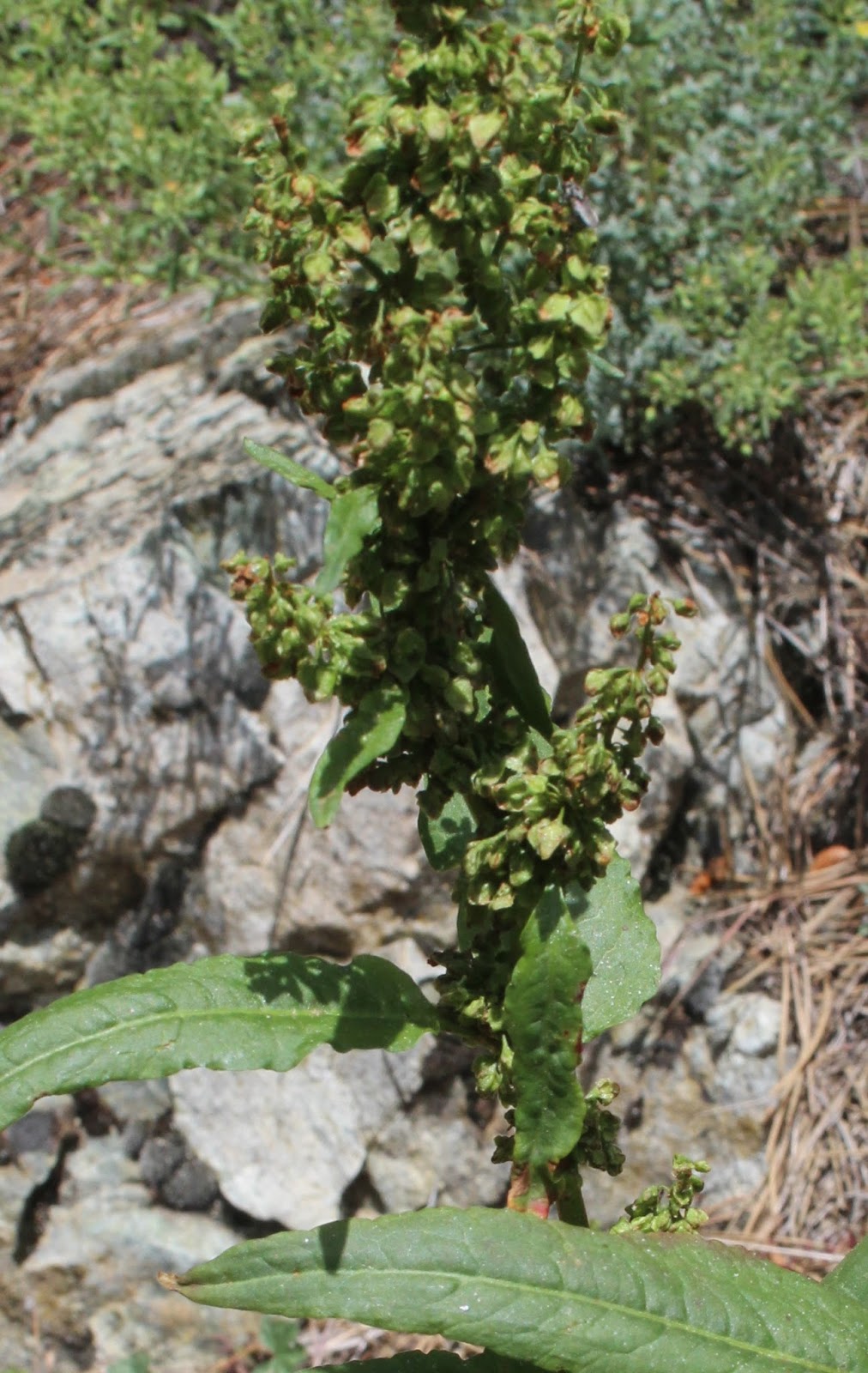
Rumex cristatus DC. - Cyprus

The docks and sorrels, genus Rumex L., are a genus of about 200 species of annual, biennial and perennial herbs in the buckwheat family Polygonaceae.
Members of this family are very common perennial herbs growing mainly in the Northern Hemisphere, but various species have been introduced almost everywhere.
Some are nuisance weeds (and are sometimes called dockweed or dock weed), but some are grown for their edible leaves.
Rumex species are used as food plants by the larvae of a number of Lepidoptera species. 
From Wikipedia, the free encyclopedia

.Photos Troodos 2/7/2015  by George Konstantinou


(Mexican) Fireplant, Painted Euphorbia, Japanese Poinsettia - Euphorbia heterophylla L. - Cyprus

Naturalized invasive (NA) to Cyprus
Euphorbia heterophylla, also known under the common names of (Mexican) Fireplant, Painted Euphorbia, Japanese Poinsettia, Desert PoinsettiaWild PoinsettiaFire on the MountainPaintedleaf, Painted Spurge, Milkweed, and Kaliko Plant, is a plant belonging to the Euphorbiaceae or spurge family.
It is a native plant of Mexico, and its original distribution includes an area spreading from California to east Texas and to much of Central America.
This plant has been introduced to South and Southeast Asia as an ornamental plant, having become a weed in India and Thailand, where it has invaded cotton fields and other agricultural terrain.It is a hardy, ruderal species, growing between 30 and 70 cm in height. The leaves at the upper end of the stalk, close to the cyathium, have a striking, scarlet red coloration. Leaves are mainly 2-4 lobed and 4–7 cm long by 1.5–3 cm wide. Their contrast with the lower dark green leaves gives this euphorbia most of its common names.
The stalk exudes a toxic milky white latex. The cyathia or false flowers, are located in clusters at the head of the stalk and are yellowish green. They have no petals, the red color being part of the young leaves' coloration. The fruits are small, segmented capsules.
This plant often loses its coloration when it grows wild as a weed. It is resistant to herbicide.
Toxicity is documented in most members of the genus Euphorbia. Individuals sensitive to latex are known to have strong reactions, including dermatitis and anaphylaxis, to the latex exuded by this plant. From Wikipedia, the free encyclopedia
.Photos Akrotiri (Bishops Pool) 5/9/2015  by George Konstantinou


Tuesday, 8 September 2015

Abra sp. - Cyprus

 Family Semelidae
Abra is a genus of saltwater clams, marine bivalve mollusks in the family Semelidae. Members of this genus are mostly under 1.5 centimeters long, and have thin shells which are usually white. These bivalves normally live under the surface of sandy and muddy sediments, in the neritic zone.
They are considered an important food source for flat fish.
.Photos Akrotiri 5/9/2015  by George Konstantinou


Monday, 7 September 2015

Isabelline shrike - Lanius isabellinus (Hemprich & Ehrenberg, 1833) - Ξανθοκεφαλάς - Cyprus


The isabelline shrike or Daurian shrike (Lanius isabellinus) is a member of the shrike family (Laniidae). It was previously considered conspecific with the red-backed shrike and red-tailed shrike.
This migratory medium-sized passerine eats large insects, small birds, rodents and lizards. Like other shrikes it hunts from prominent perches, and impales corpses on thorns or barbed wire as a larder. It breeds in open cultivated country, preferably with thorn bushes.
The plumage is isabelline, the sandy colour which gives rise to its name. It has a red tail. Young birds can be distinguished from young red-backed shrikes by the much sparser vermiculations on the underparts.From Wikipedia, the free encyclopedia

Photos and video Meneou , 7/9/2015 by George Konstantinou


Fossil of Simnia sp. - Cyprus

Simnia is a genus of sea snailsmarine gastropod mollusks in the family Ovulidae

Photos Dali , 3/2/2013 by George Konstantinou


Truncatella subcylindrica (Linnaeus, 1767) - Cyprus

Truncatella subcylindrica is a species of small land snail that lives at the edge of the sea. It has gills and an operculum and is gastropod mollusk or micromollusk in the family Truncatellidae.
This species of snail has a shell which is light in color, and which can reach 5 mm in length.
Like all other species in this genus, the shell loses its apical whorls as it grows, giving it a truncated and cylindrical appearance
This snail is native to areas of the northeastern Atlantic coastline, from Morocco and the Mediterranean coast to the Black Sea. This native distribution includes Great Britain.
There are also some early records from the late 1800s for the eastern United States, on the coast of Newport, Rhode Island, where it was presumably introduced
This species is found in marine coastal environments, near or just above the high tide line on stones and pebbles, fine sediments and decomposing vegetation. It prefers the edge of sheltered waters where the salinity is at 18-40 psu.
The sexes are separate. Fertilized eggs are laid as egg capsules, which are attached to detritus.
.From Wikipedia, the free encyclopedia
Photos Xylofagou , 3/2/2013 by George Konstantinou


Potamides conicus (Blainville, 1829) - Cyprus

Family Potamididae

 Is a species of small sea snail, a marine gastropod mollusk in the family Potamididae
This species occurs patchily along coastal habitats in the eastern and southern Mediterranean, the Red Sea and the Persian Gulf, as well as in Libya, Sardinia and Malta. In Egypt, it is found inland in saline lakes such as Birket Gessebaya, Birket Maragi, Lake Qarun and the Bitter Lakes (Taraschewski and Paperna 1981).

.Photos Akrotiri 5/9/2015  by George Konstantinou


Black-jack, beggar-ticks, cobbler's pegs, and Spanish needle. - Bidens pilosa L. - Cyprus


Bidens pilosa is a species of flowering plant in the aster family. It is native to the Americas but it is known widely as an introduced species of other regions, including Eurasia, Africa, Australia, and the Pacific Islands. Its many common names include black-jackbeggar-tickscobbler's pegs, and Spanish needle.
This plant is considered a weed in some tropical habitats. However, in some parts of the world it is a source of food or medicine. For example, in sub-Saharan Africa, the tender shoots and young leaves are used fresh or dried as a leaf vegetable, particularly in times of scarcity.
Bidens pilosa is an annual forb of gracile habit, growing up to 1.8 meters tall. It grows aggressively on disturbed land and often becomes weedy. The leaves are oppositely arranged and pinnate in form with three to five dentate, ovate-to-lanceolate leaflets. The petioles are slightly winged.
The plant may flower at any time of the year, but in temperate regions it blooms mainly in summer and autumn. Flowers are borne in small heads on relatively long peduncles. The heads bear about four or five broad white ray florets, surrounding many tubular yellow disc florets. The fruits are slightly curved, stiff, rough black rods, tetragonal in cross section, about 1 cm long, with typically two to three stiff, heavily barbed awns at their distal ends. The infructescences form stellate spherical burrs about one to two centimeters in diameter. The barbed awns catch onto fur or clothing, and can injure flesh. It is an effective means of seed dispersal by zoochory, as the seeds are transported by animals. This mechanism has helped the plant become a noxious weed in temperate and tropical regions.
From Wikipedia, the free encyclopedia
Photos Akrotiri (Bishops Pool) 5/9/2015  by George Konstantinou


Saturday, 5 September 2015

Red-necked phalarope (Phalaropus lobatus) (Linnaeus, 1758) - Ερυθρόλαιμος Φαλαρόποδας - Cyprus


The red-necked phalarope (Phalaropus lobatus) is a small wader. This phalarope breeds in the Arctic regions of North America and Eurasia. It is migratory, and, unusually for a wader, winters at sea on tropical oceans.
The red-necked phalarope was one of the many bird species originally described by Linnaeus in the landmark 1758 10th edition of his Systema Naturae, where it was given the binomial name of Tringa lobata.
The red-necked phalarope is about 18 cm (7.1 in) in length, with lobed toes and a straight, fine bill. The breeding female is predominantly dark grey above, with a chestnut neck and upper breast, black face and white throat. They have a white wing stripe which helps distinguish this bird from the similar Wilson's phalarope.The breeding male is a duller version of the female. They have lobed toes to assist with their swimming. Young birds are grey and brown above, with buff underparts and a black patch through the eye. In winter, the plumage is essentially grey above and white below, but the black eyepatch is always present. They have a sharp call described as a whit or twit.
The typical avian sex roles are reversed in the three phalarope species. Females are larger and more brightly coloured than males. The females pursue and fight over males, and will defend their mate from other females until the clutch is complete and the male begins incubation. The males perform all incubation and chick-rearing activities, while the females may attempt to find another mate. If a male loses his eggs to predation, he may re-pair with his original mate or a new female to try again. Once it becomes too late in the breeding season to start new nests, females begin their southward migration, leaving the males to incubate the eggs and look after the young. Clutch size is usually 4 splotchy olive-buff eggs, but can be fewer. The young mainly feed themselves and are able to fly within 20 days of hatch.
When feeding, a red-necked phalarope will often swim in a small, rapid circle, forming a small whirlpool. This behaviour is thought to aid feeding by raising food from the bottom of shallow water. The bird will reach into the center of the vortex with its bill, plucking small insects or crustaceans caught up therein. On the open ocean, they are often found where converging currents produce upwellings. During migration, some flocks stop over on the open waters at the mouth of the Bay of Fundy to take advantage of food stirred up by tidal action.
Almost all of the nonbreeding season is spent in open water. As this species rarely comes into contact with humans, it can be unusually tame.
The red-necked phalarope is one of the species to which the Agreement on the Conservation of African-Eurasian Migratory Waterbirds(AEWA) applies.From Wikipedia, the free encyclopedia

.Photos and video Akrotiri 5/9/2015  by George Konstantinou


Red knot (Calidris canutus) (Linnaeus, 1758) Διπλονεραλλίδι, Κοκκινοσκαλίδρα, Χοντροσκαλίδρα - Cyprus


The red knot (Calidris canutus) (just knot in Europe) is a medium-sized shorebird which breeds in tundra and the Arctic Cordillera in the far north of Canada, Europe, and Russia. It is a large member of the Calidris sandpipers, second only to the great knot. Six subspecies are recognised.
Their diet varies according to season; arthropods and larvae are the preferred food items at the breeding grounds, while various hard-shelled molluscs are consumed at other feeding sites at other times. North American breeders migrate to coastal areas in Europe and South America, while the Eurasian populations winter in Africa, Papua New Guinea, Australia, and New Zealand. This species forms enormous flocks when not breeding.
In the breeding season, the red knot has a circumpolar distribution in the high Arctic, then migrates to coasts around the world from 50° N to 58° S. The red knot has one of the longest migrations of any bird. Every year it travels more than 9,000 mi (14,000 km) from the Arctic to the southern tip of South America. The exact migration routes and wintering grounds of individual subspecies are still somewhat uncertain. The nominate race C. c. canutus breeds in the Taymyr Peninsula and possibly Yakutia and migrates to the Western Europe and then down to western and southern Africa. C. c. rogersi breeds in the Chukchi Peninsula in eastern Siberia, and winters in eastern Australia and New Zealand. Small and declining numbers of rogersi(but possibly of the later described piersmai) winter in the mudflats in the Gulf of Mannar and on the eastern coast of India. The recently split race C. c. piersmai breeds in the New Siberian Islands and winters in north-western Australia. C. c. roselaari breeds in Wrangel Island in Siberia and north-western Alaska, and it apparently winters in Florida, Panama and Venezuela. C. c. rufa breeds in the Canadian low Arctic, and winters South America, and C. c. islandica breeds in the Canadian high Arctic as well as Greenland, and winters in Western Europe.
Birds wintering in west Africa were found to restrict their daily foraging to a range of just 2–16 km2 (0.77–6.18 sq mi) of intertidal area and roosted a single site for several months. In temperate regions such as the Wadden Sea they have been found to change roost sites each week and their feeding range may be as much as 800 km2 (310 sq mi) during the course of a week.
B95, also known as Moonbird, is a noted individual of the subspecies C. c. rufa. A male, he has become famous amongst conservationists for his extreme longevity — he was aged at least 20 as of his last sighting in May 2014.
An adult red knot is the second largest Calidris sandpiper, measuring 23–26 cm (9.1–10.2 in) long with a 47–53 cm (19–21 in) wingspan. The body shape is typical for the genus, with a small head and eyes, a short neck and a slightly tapering bill that is no longer than its head.[18] It has short dark legs and a medium thin dark bill. The winter, or basic, plumage becomes uniformly pale grey, and is similar between the sexes. The alternate, or breeding, plumage is mottled grey on top with a cinnamon face, throat and breast and light-coloured rear belly. The alternate plumage of females is similar to that of the male except it is slightly lighter and the eye-line is less distinct.Canutus, islandica and piersmai are the "darker" subspecies. Subspecies rogersi has a lighter belly than either roselaari or piersmai, andrufa is the lightest in overall plumage. The transition from alternate to basic plumages begins at the breeding site but is most pronounced during the southwards migration. The molt to alternate plumage begins just prior to the northwards migration to the breeding grounds, but is mostly during the migration period.From Wikipedia, the free encyclopedia

.Photos and video Akrotiri 5/9/2015  by George Konstantinou


Friday, 4 September 2015

Scarites laevigatus (Fabricius, 1792) - Cyprus

Family: Carabidae 

Scarites is a genus of ground beetle native to the Palearctic, the Near EastNorth America and North Africa. These beetles share physical characteristics of the more tropical stag beetles, but are not closely related. Scarites can often be found under loose rocks and boards. If touched, they often "play dead" by folding in their legs and arching their backs. The adult beetles are predators and have been observed overpowering mealworms much larger than themselves.From Wikipedia, the free encyclopedia

.Photos Meneou 28/8/2015 by George Konstantinou


Embia sp. - Cyprus

Male


Anisembiidae is a family of web-spinners in the order Embioptera.

.Photos Geri 27/8/2015 by George Konstantinou


Female