Translate

Sunday, 15 May 2016

Nigma flavescens (Walckenaer, 1830) - Cyprus

Family: Dictynidae
Female
Male

Nigma is a genus of araneomorph spiders that occurs in Eurasia and Northern Africa. They include with N. walckenaeri the biggest member of the family Dictynidae (up to 5mm body length). From Wikipedia, the free encyclopedia

Photos at Troodos 9/5/2016, by Michael Hadjiconstantis. 


Oxyopes heterophthalmus (Latreille, 1804) - lynx spider - Cyprus

Family: Oxyopidae
Female
Male


Oxyopes is a genus of lynx spiders found worldwide. It includes arounds 300 species and is classified under the lynx spider family Oxyopidae. Like other lynx spiders, they are easily recognizable by the six larger eyes arranged hexagonally on top of the head (prosoma), with the remaining smaller two eyes in front. They are also characterized by long spine-like bristles (setae) on their legs. They are ambush predators, actively hunting prey by sight. Though they produce and use silk, they do not build webs to capture prey.


Photos at Kapedes 19/4/2016, by Michael Hadjiconstantis. 

Sitophilus kakourisi (Alziar et al., 2009) - Endemic to Cyprus

Endemic to Cyprus

Family: Curculionidae
Subfamily: Dryophthorinae

Sitophilus kakourisi is a species of weevils, endemic to Cyprus. It is found in the leaf litter of forest with Oak trees.

Sitophilus is a genus of weevils. Some species are familiar as pests of stored food products. Notable species include the rice weevil (S. oryzae), wheat weevil (S. granarius), and maize weevil (S. zeamais).

Distribution
The rice and maize weevils have a nearly cosmopolitan distribution, occurring throughout the warmer parts of the world. In Europe they are replaced by the temperate Palaearctic wheat weevil.

Biology
The adult female weevil bores a hole in a grain, nut, or seed, and deposits an egg, usually one egg per individual grain. She seals the hole with a secretion. The larva develops while feeding on the interior of the grain, and then pupates. It usually leaves the grain completely hollow when it exits as an adult. The wheat weevil can live on acorns, and may have used them as a host before agriculture made grain plentiful. The rice weevil can live on beans, nuts, grains, and some types of fruit, such as grapes. Several other Sitophilus use the acorns of oaks such as bluejack oak (Quercus incana) and moru oak (Q. floribunda). Some use the seeds of trees in the Dipterocarpaceae and the legume family, Fabaceae. The tamarind weevil (S. linearis) is only known from the seeds of tamarind.

Several Sitophilus species are hosts to an intracellular γ-Proteobacterium. Weevil and bacterium have a symbiotic relationship in which the bacterium produces nutrients such as amino acids and vitamins for the host, supplementing its cereal diet. From Wikipedia, the free encyclopedia, edited. 


Photos at Alona 19/4/2016, by Michael Hadjiconstantis. 


Lagoon cockle - Cerastoderma glaucum (Bruguière, 1789) - Cyprus

Family Cardiidae
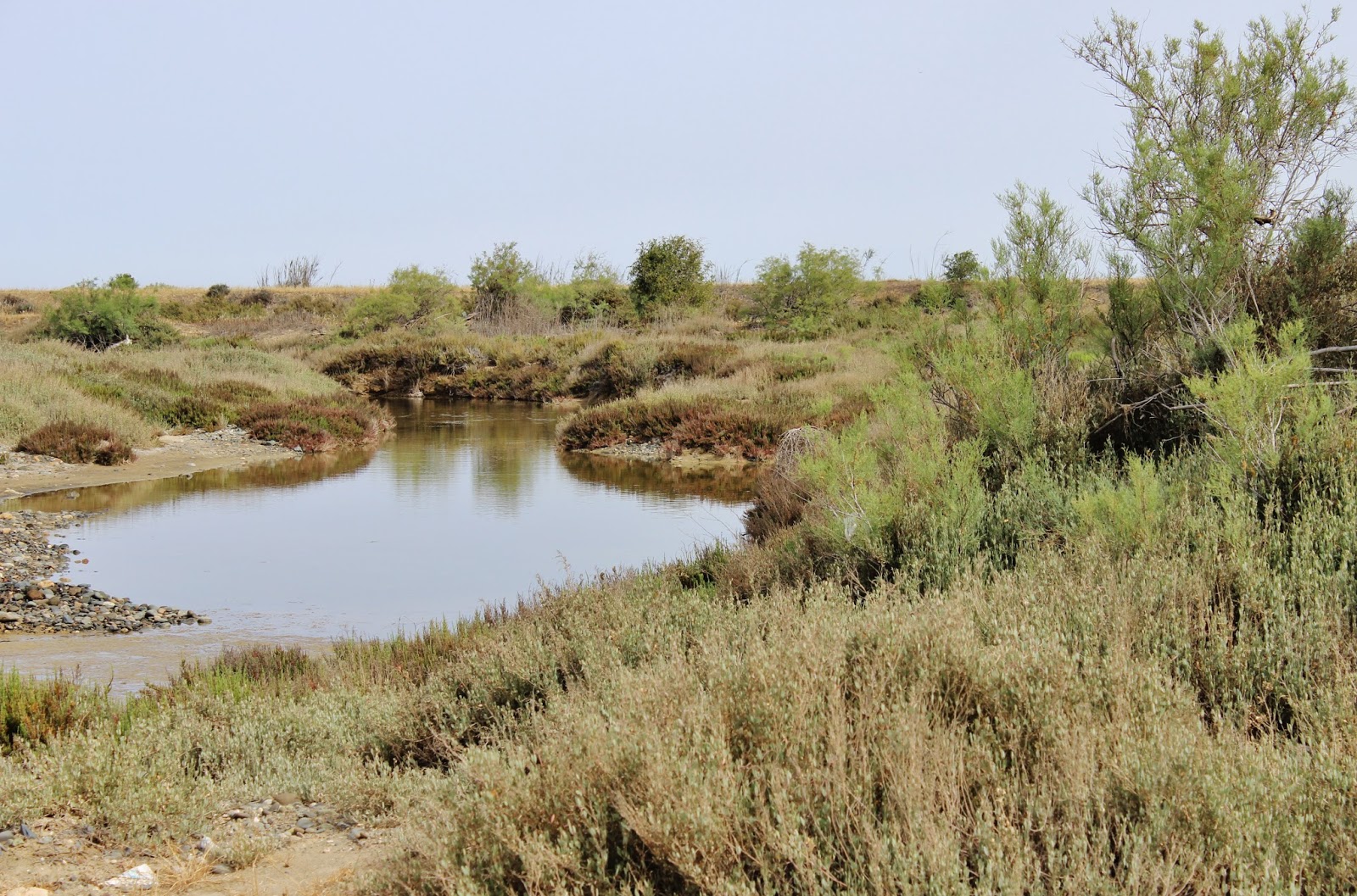
Σε λίμνες με υφάλμυρα νερά στο κατεχόμενο χωριό Συριανοχώρι
Synonyms
Cardium glaucum Poiret, 1789
Cerastoderma lamarcki (Reeve, 1845)

Cerastoderma glaucum, commonly known as the lagoon cockle, is a species of saltwater clam, a marine bivalve mollusc in the family Cardiidae, the cockles.

This species is found along the coasts of Europe and North Africa, including the Mediterranean and Black Seas and the Caspian Lake, and the low-salinity Baltic Sea. It is a euryhaline species living in salinities 4-100 ‰. In north-west Europe (including the British Isles), it typically does not live on open shores but rather in shallow burrows in saline lagoons, or sometimes on lower shores in estuaries. It cannot tolerate significant exposure to the air. The form found in lagoons is thinner-shelled than the estuarine populations.

The lagoon cockle can grow to the length of 50 mm. In north-west Europe, it spawns in May-July, and the planktonic larval phase takes 11-30 days. The life span of the settled cockle is typically 2-5 years.

The species was described as Cardium glaucum in 1789 almost simultaneously both by Bruguière and by Poiret.
From Wikipedia, the free encyclopedia

Photos Sirgianochori 13/5/2016 by George Konstantinou


Thursday, 12 May 2016

Cladium mariscus (L.) Pohl - Κλάδιο ο μαρίσκος - Cyprus

Red Data Book category
Cladium mariscus is a species of flowering plant in the sedge family known by the common names swamp sawgrass, great fen-sedge, saw-sedge or sawtooth sedge. Previously it was known as elk sedge. It is native of temperate Europe and Asia where it grows in base-rich boggy areas and lakesides. It can be up to 2.5 metres (8 ft 2 in) tall, and has leaves with hard serrated edges.
From Wikipedia, the free encyclopedia

Photos Fasouri  8/11/2014 by George Konstantinou

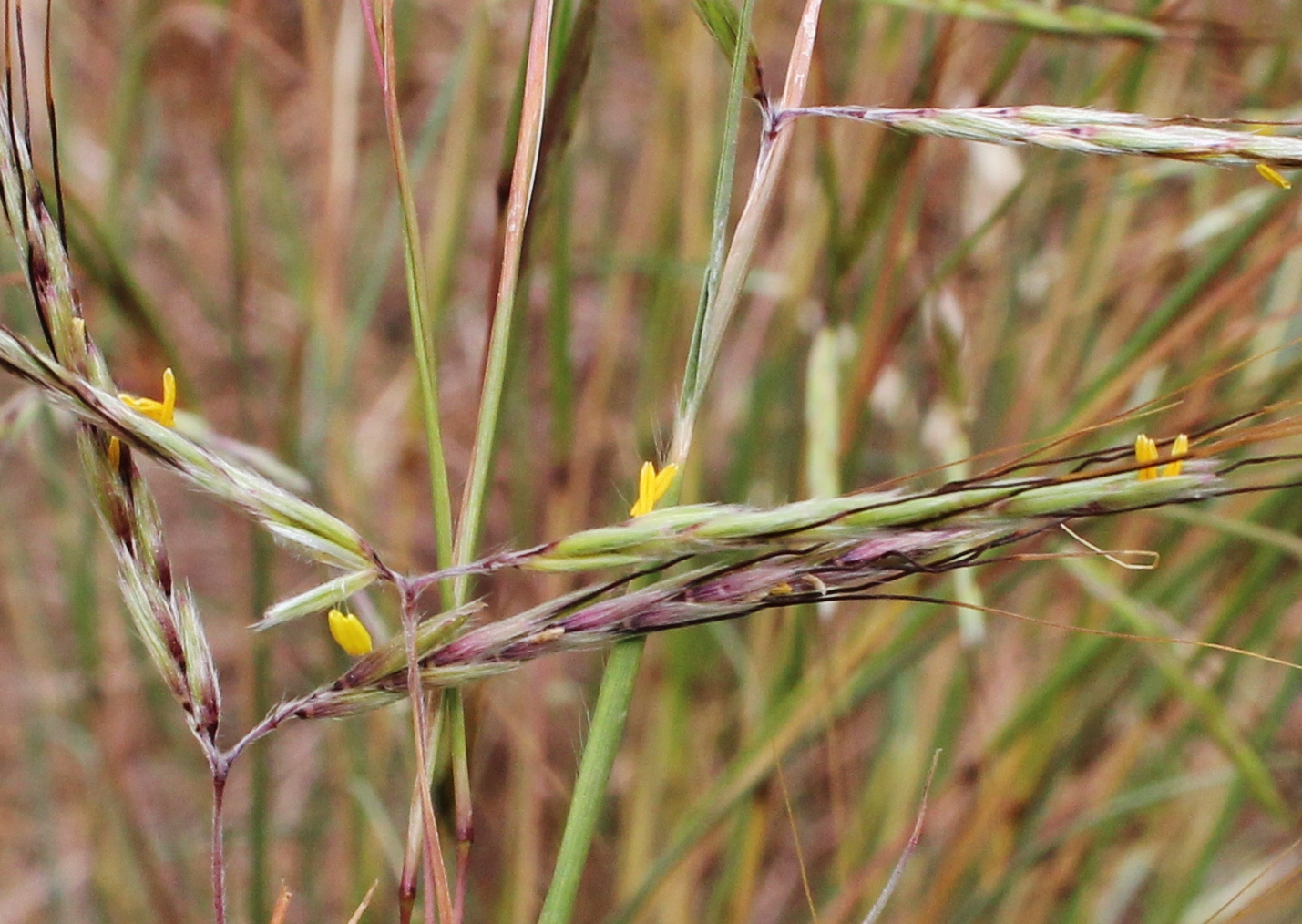
Hyparrhenia hirta (L.) Stapf - Ανελίφκια, Στρατουρόχορτον - Cyprus

Hyparrhenia hirta is a species of grass known by the common names common thatching grass and Coolatai grass. It is native to much of Africa and Eurasia, and it is known on other continents as an introduced species. In eastern Australia it is a tenacious noxious weed. In South Africa, where it is native, it is very common and one of the most widely used thatching grasses. It is also used for grazing livestock and weaving mats and baskets.

This is a perennial grass forming clumps 30 centimetres to one metre tall with tough, dense bases sprouting from rhizomes. The inflorescence atop the wiry stem is a panicle of hairy spikelets with bent awns up to 3.5 centimetres long. The grass can grow in a variety of habitat types, in dry conditions, heavy, rocky, eroded soils, and disturbed areas.
From Wikipedia, the free encyclopedia

Photos Harzia  13/5/2015 by George Konstantinou


Wednesday, 11 May 2016

Teucrium creticum L. - Αρκογλασμαρίν, Αρκολασμαρής - Cyprus


Teucrium is a genus of perennial plants in the family Lamiaceae. The name is believed to refer to King Teucer of Troy.Members of the genus are commonly known as germanders. There are hundreds of species, including herbs, shrubs or subshrubs. They are found all over the world but are most common in Mediterranean climates.

An unusual feature of this genus compared with other members of Lamiaceae is that the flowers completely lack the upper lip of the corolla, although it is somewhat reduced also in other genera (Ajuga among them).

Several species are used as food plants by the larvae of some Lepidoptera species including the Coleophora case-bearers Coleophora auricella and Coleophora chamaedriella. The latter is only known from Wall Germander (T. chamaedrys).

Teucrium species are rich in essential oils. They are valued as ornamental plants and a pollen source, and some species have culinary and/or medical value.
From Wikipedia, the free encyclopedia

Photos Agios Epictitos  27/4/2015 by George Konstantinou


Daucus pumilus (L.) Hoffmanns. & Link - Cyprus

Daucus pumilus is a species of plants in the carrot family Apiaceae

Photos Agios Epictitos  27/4/2016 by George Konstantinou