Translate

Tuesday, 21 June 2016

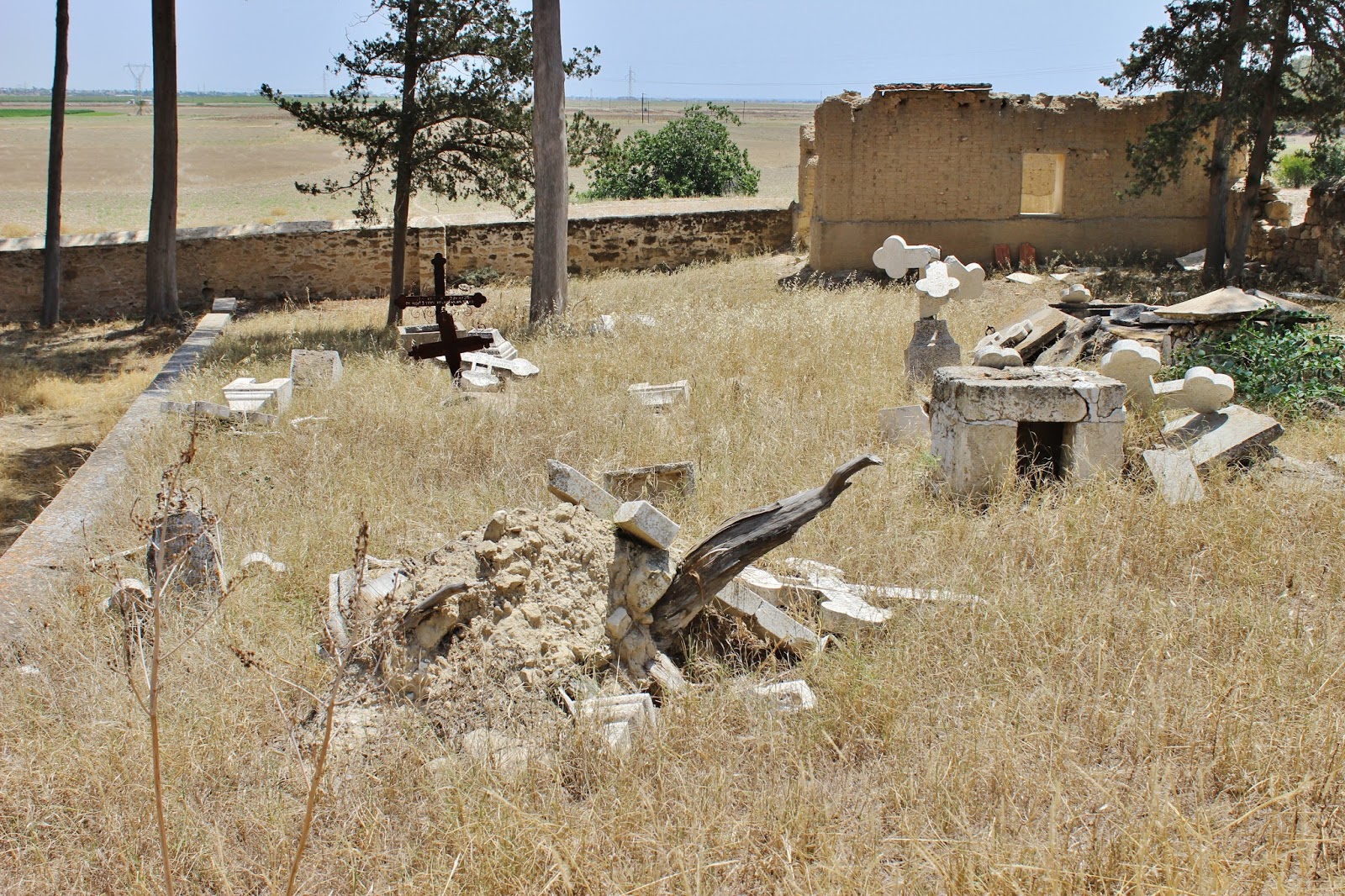
Η εκκλησία του Αγίου Προκοπίου στο κατεχόμενο χωριό Σύγκραση της επαρχίας Αμμοχώστου - Cyprus

See also
Παρά το μεγάλο ενδιαφέρον που αναμφισβήτητα παρουσιάζει ο ναός του Αγίου Προκοπίου στο κατεχόμενο σήμερα χωριό Σύγκραση της επαρχίας Αμμοχώστου είναι ένα από τα λιγότερα γνωστά βυζαντινά μνημεία της Κύπρου.
Ο μεγαλοπρεπής ναός του Αγίου Προκοπίου στη Σύγκραση αποτελεί ένα από τα σημαντικότερα μνημεία στην Κύπρο, τόσο λόγω του αρχιτεκτονικού του τύπου, όσο και λόγω της διακόσμησης στο εσωτερικό του. Αρχιτεκτονικά εντάσσεται στον τύπο του μεταβατικού σταυροειδούς εγγεγραμμένου με τρούλλο ναού, ο οποίος διακρίνεται για τις μεγάλες διαστάσεις του και την επιμελημένη τοιχοδομία του. Χρονολογικά φαίνεται νὰ ἀνάγεται στο 10ο αἰώνα, στην περίοδο δηλαδή της επανένταξης της Κύπρου υπό τον πλήρη βυζαντινό έλεγχο. Κατά την περίοδο εκείνη διαδόθηκε ο τύπος αυτός σε ολόκληρη τη νησιωτική χώρα (π.χ. Κρήτη, Λέσβος, Χίος, Ικαρία, Ρόδος, Νάξος). Για την κατασκευή του κρηπιδώματος χρησιμοποιήθηκαν ογκώδη, ακανόνιστοι δόμοι σε δεύτερη χρήση, όπως ομοίως συναντούμε και σε σύγχρονα μνημεία της περιόδου (μεσοβυζαντινή φάση Αγίου Λαζάρου Λάρνακος). Αρχαία συλλήματα, ενδεχομένως από την κοντινή Σαλαμίνα, βρέθηκαν στον περίβολο του ναού (αράβδωτοι κίονες και μαρμάρινο κιονόκρανο, το οποίο υπήρχε το 2003 και σήμερα έχει εξαφανισθεί). Επίσης, στον ναό είχε εντοπισθεί πριν την Τουρκική εισβολή και κολυμβήθρα λαξευμένη σε υστερορωμαϊκό επιτύμβιο κιονίσκο.

Το μνημείο αποπνέει την αίσθηση του όγκου και του μεγέθους και θα πρέπει να σχετίζεται άμεσα με την κωνσταντινουπολίτικη παρουσία στη Μεγαλόνησο. Η απουσία νάρθηκος, η τριμερής διάρθρωση του Ιερού και οι σταυροειδείς νευρώσεις του τρούλλου συνδέουν τον Άγιο Προκόπιο μα μια σειρά αντίστοιχων ναών, όπως π.χ. τον Άγιον Ιλαρίωνα και Βαρνάβα στην Περιστερώνα Λευκωσίας, τον Άγιο Λάζαρο στη Λάρνακα και τον Απόστολο Βαρνάβα. Σε όλα τα μνημεία αυτά παρατηρείται επίσης μέσῳ της διακόσμησης του εσωτερικού του μνημείου η προσπάθεια ανάδειξης μεγαλοπρέπειας και πλούτου.

Έτσι και στον Άγιο Προκόπιο το εσωτερικό του ναού ήταν διακοσμημένο με τοιχογραφίες, μαρμαροθετήματα γλυπτό διάκοσμο, καθὼς επίσης και σύνθρονο. Δίπλα στη δυτική θύρα του ναού, στην αριστερή πλευρά είχε εντοιχισθεί λίθινο προσκυνητάριο για την τοποθέτηση της εφέστειας εικόνας του ναού στις περιόδους λιτανείας και εορτών. Σημαντικότατο επίσης ιστορικό στοιχείο αποτελεί ο εντοπισμός μιας γραπτής επιγραφής στον ναό, η οποία ένεκα των ιστορικών γεγονότων που αναφέρει ανάγει τη χρονολόγηση του μνημείου τουλάχιστον στο 10ο αιώνα. Μπροστά από την επιγραφή αυτή βρισκόταν υπόγειο αγίασμα.

Ο ναός επισκευάσθηκε τόσο κατά την περίοδο της Λατινοκρατίας, όσο και στη σύγχρονη περίοδο. Στις περιόδους επισκευών θα ανάγεται και η τοποθέτηση των πινακίων στὸ εσωτερικό του τρούλλου. Λίθινη εγχάρακτη επιγραφή στο υπέρθυρο μνημονεύει τη 2α Ιουλίου 1918, ως χρονολογία περάτωσης εργασιών ανακαίνισης. Στο δυτικό τοίχο του ναού εντοιχισμένη πλάκα μνημονεύει την κατασκευή του δαπέδου δαπάναις Ανδρέα Χ. Λούτσιου το έτος 1956. Ενδεχομένως τότε να ανακατασκευάσθηκε και το σημερινό μαρμαροθέτημα στο Ιερό. Σε δυο τυφλές κόγχες εν είδει προσκυνηταρίων απεικονίσθηκαν δυο έφιπποι άγιοι, ο Προκόπιος και ο Γεώργιος. Οι τοιχογραφίες αυτές έχουν υποστεί βανδαλισμούς μετά την τουρκική εισβολή. Αυτή του αγίου Προκοπίου ανάγεται στα τέλη του 19ου αιώνος και φαίνεται πως αντέγραψε αντίστοιχη παράσταση υποκείμενου τοιχογραφικού στρώματος. Τοιχογραφικά σπαράγματα και άλλες τοιχογραφίες (π.χ. άγιος Ανδρόνικος και Αθανασία) σώζονται διάσπαρτες σε ποικίλα σημεία του ναού παραπέμποντας σε πλήρη εικονογράφηση της εκκλησίας και χρονολογούνται στη μεσαιωνική περίοδο. Τίποτε δεν σώζεται σήμερα από το ξυλόγλυπτο εικονοστάσιο του ναού. Το 1975 εντοπίσθηκε σπασμένος και ριγμένος στο έδαφος ο Εσταυρωμένος του εικονοστασίου. Σύγχρονο ήταν και το κωδωνοστάσιο που κτίσθηκε στη βορειοανατολική γωνία του ναού σε νεο-γοτθίζοντα ρυθμό. Ο περίβολος του ναού χρησιμοποιήθηκε ως κοιμητήριο. Σήμερα σπασμένοι σταυροί και ανεσκαμμένα μνήματα στη νότια πλευρά του ναού δηλώνουν το πέρασμα του Τούρκου εισβολέα.

Από το περιοδικό «Πνευματική Διακονία» της Ιεράς Μητροπόλεως Κωνσταντίας, Κύπρος
Πηγή http://noctoc-noctoc.blogspot.com.cy/2012/04/blog-post_18.html


Photos 19/6/2016 by George Konstantinou 


Monday, 20 June 2016

Ophioderma longicauda (Bruzelius, 1805) - Cyprus


Ophioderma is a genus of brittle stars in the family Ophiodermatiidae.

Underwater photos Lara,Paphos,18.06.2016 by Costas Constantinou


Common lionfish - Pterois miles (J. W. Bennett, 1828) - Λιονταρόψαρο - Cyprus


Lesepsian migrants to Cyprus

The common lionfish (Pterois miles), also known as the devil firefish, is a species of ray-finned fish native to the western Indo-Pacific region. The common lionfish is frequently confused with its close relative, the red lionfish (Pterois volitans). The scientific name is from Greek pteron, meaning "wing," and Latin miles, meaning "soldier."


The common lionfish grows up to 35 cm (14 in) in length. The dorsal fin has 13 long, strong spines and nine to 11 soft rays, and the anal fin has three long spines and six to seven soft rays. The dorsal fin appears feathery and the pectoral fins are wing-like with separate broad, smooth rays. These fish vary in colour from reddish to tan or grey and have numerous thin, dark, vertical bars on their head and body. Its head is less angular than that of P. volitans.


The common lionfish is mainly nocturnal and may hide in crevices during the daytime. It feeds on fish and small crustaceans. It has few predators, probably because of its venomous spines, but larger lionfish do prey on smaller ones. The bluespotted cornetfish (Fistularia commersonii) has been shown to feed on it, as also do groupers in the Bahamas

P. miles is native to the Indian Ocean, from the Red Sea, to South Africa, and to Indonesia; it has also recently been reported in the eastern Mediterranean Sea, near Cyprus. It is very similar in appearance to P. volitans, which does not occur in the Red Sea. This fish is usually found in areas with crevices or lagoons, often on the outer slopes of coral reefs. It is also now present off the east coast of the United States and in the Caribbean Sea where is regarded as an invasive species.

The fin spines are highly venomous and have caused death to humans
From Wikipedia, the free encyclopedia


Underwater photos 17mts deep,Cape Kiti,Larnaca,
20.06.2016
 by Costas Constantinou

Underwater photos  by Kostas Aristeidou


Underwater photos  by Costas Constantinou


Saturday, 18 June 2016

Cotton-spinner or tubular sea cucumber - Holothuria tubulosa Gmelin, 1791 - Cyprus


Holothuria tubulosa, the cotton-spinner or tubular sea cucumber, is a species of sea cucumber in the family Holothuriidae. It is the type species of the genus Holothuria and is placed in the subgenus Holothuria, making its full name Holothuria (Holothuria) tubulosa

Holothuria tubulosa grows to a length of between 20 centimetres (7.9 in) and 45 centimetres (18 in), and a diameter of 6 centimetres (2.4 in). It is roughly cylindrical with a flattened base on which there are three longitudinal rows of tube feet. It has a tough, leathery skin. The general colour is a shade of brown and the surface is covered with numerous dark-coloured, conical, thorn-like projections known as papillae. It often appears greyish, as it secretes a protective film of mucus to which bits of seaweed and sediment may adhere. It has a fringe of short, flattened tentacles around the mouth at the anterior end and an anus at the posterior end.

Holothuria tubulosa is found in temperate regions of the eastern Atlantic Ocean as far north as the Bay of Biscay, in the Mediterranean Sea, where it is abundant. It is found on sandy seabeds, among seagrass (Posidonia spp.) and on muddy rocks to a depth of about 100 metres (330 ft)

Holothuria tubulosa feeds on detritus, algae and plankton. It uses its tube feet to move across the surface or adhere to rocks.

Holothuria tubulosa is dioecious, with each individual being either male or female but with no difference between them in external appearance. In a study in the Mediterranean Sea, a mass spawning event was observed in the afternoons of the two days in August 2003 that coincided with the full moon. Large numbers of mature individuals simultaneously adopted the spawning position, rearing their anterior ends up and leaving only the hind third of their body in contact with the seabed. This raises their genital orifices, situated just below the mouth, clear of the substrate to allow for maximum dispersal of the gametes. First, some individuals, believed to be males, emitted a whitish fluid which gradually dispersed in the surrounding water. Next, a smaller number of individuals, believed to be female, emitted a more viscous fluid, perhaps in response to the release of the male gametes. Each release lasted about 30 minutes. The necessary conditions for spawning seemed to be a full moon and a sea temperature of about 25 °C (77 °F).

The fertilised eggs hatch in about 24 hours and the developing larvae are planktonic. They feed on microscopic algae and pass through several stages over the course of a few weeks before settling on the seabed and undergoing metamorphosis into juveniles.

Sea cucumbers are used for food in some countries, particularly Taiwan, Hong Kong, Singapore, Korea and Norway. There is a commercial fishery in Turkey and a closed season is imposed in August and September to allow the animals to spawn. Holothuria tubulosa is one of the species collected by divers, who can gather 2000 to 3000 in a day. The sea cucumbers are either sun dried, oven dried, or frozen before being exported.
From Wikipedia, the free encyclopedia

Underwater photos Lara,Paphos,18.06.2016 by Costas Constantinou

Beadlet anemone - Actinia equina (Linnaeus, 1758) - Ντομάτα της Θάλασσας - Cyprus


The beadlet anemone, Actinia equina, is a common sea anemone found on rocky shores around all coasts of the United Kingdom. Its range extends to the rest of Western Europe and the Mediterranean Sea, and along the Atlantic coast of Africa as far south as South Africa.

Actinia equina can be found both in exposed and sheltered situations. It is highly adapted to the intertidal zone as it can tolerate both high temperatures and desiccation. The anemone may also be found in regions of variable salinity such as estuaries.

Underwater, it displays up to 192 tentacles, arranged in six circles. Out of water, the tentacles retract and the anemone resembles a blob of red, brown, green or orange jelly, up to about 5 centimetres (2.0 in) across. It has bright blue beads (known as acrorhagi) located just beneath the tentacles, organised as an external ring containing stinging cells located at the top of the column that it uses to fight over territory. The acrorhagi contains the cnidocysts which themselves contain the nematocysts. There is some evidence that the various colour forms may in fact be different species.

Actinia equina is similar in form to the Waratah anemone (Actinia tenebrosa) of Australia and New Zealand. It is also similar in form to the strawberry anemone (Actinia fragacea) but is a uniform colour and is typically rather smaller.

Actinia equina is viviparous, with up to one hundred embryos developing inside the body cavity before being ejected into the open water as juveniles
From Wikipedia, the free encyclopedia

Underwater photos Lara,Paphos,18.06.2016 by Costas Constantinou


Friday, 17 June 2016

Ovis gmelini ophion (Cyprian Wild Sheep, Cyprus Mouflon) Αγρινό - Video - Cyprus

Smooth gooseneck barnacle , Pelagic gooseneck barnacle - Lepas anatifera Linnaeus, 1758 - Cyprus

Family Lepadidae

Lepas anatifera, commonly known as the pelagic gooseneck barnacle or smooth gooseneck barnacle, is a species of barnacle in the family Lepadidae. These barnacles are found, often in large numbers, attached by their flexible stalks to floating timber, the hulls of ships, piers, pilings, seaweed and various sorts of flotsam

The body or capitulum of Lepas anatifera is supported by a long, flexible stalk or peduncle. There are five smooth, translucent plates, edged with scarlet and separated by narrow gaps. The plates have growth lines parallel with their margins and a few faint radial sculpture lines. Inside the capitulum, the barnacle has a head and thorax and vestigial abdomen. A number of brown, filamentous cirri or feeding tentacles project from between the plates. The peduncle is tough and a purplish-brown colour. The capitulum can grow to a length of 5 centimetres (2.0 in) and the peduncle varies between 4 centimetres (1.6 in) and 80 centimetres (31 in)

Lepas anatifera has a cosmopolitan distribution and is found in tropical and subtropical seas worldwide. Because it is often attached to objects carried into colder seas by currents, such as the North Atlantic Drift, it is often found well away from its place of origin and in waters too cold for it to reproduce. In this way it has been recorded from Norway, the Shetland Islands, the Faeroe Islands, Iceland and Spitsbergen

Lepas anatifera is a hermaphrodite and starts to breed when it is about 2.5 centimetres (1 in) long. Fertilisation is internal and the eggs are brooded inside the mantle for a week before emerging as free swimming nauplius larvae. After further development, drifting as part of the plankton, these settle onto floating objects.

Lepas anatifera has long been known to grow on sea turtles, but in 2008, some small specimens were found attached to an American crocodile (Crocodylus acutus) on the Pacific coast of Mexico. This crocodile species mostly inhabits mangrove swamps and river estuaries but it is salt tolerant, and is sometimes found in marine environments. In this instance, the size of the goose-neck barnacles indicated that the crocodile must have been in the sea for at least a week. This is the first time that Lepas anatifera has been recorded as an epibiont of a crocodilian

In 13th-century England the word "barnacle" was used for a species of waterfowl, the barnacle goose (Branta leucopsis). This bird breeds in the Arctic but winters in the British Isles so its nests and eggs were never seen by the British. It was thought at the time that the gooseneck barnacles that wash up occasionally on the shore had spontaneously generated from the rotting wood to which they were attached, and that the geese might be generated similarly. Credence to the idea was provided by the tuft of brown cirri that protruded from the capitulum of the crustaceans which resembled the down of an unhatched gosling. Popular belief linked the two species and a writer in 1678 wrote "multitudes of little Shells; having within them little Birds perfectly shap'd, supposed to be Barnacles [by which he meant barnacle geese].
From Wikipedia, the free encyclopedia

Underwater photos Protaras by Costas Constantinou


Thursday, 16 June 2016

Picarel - Spicara smaris (Linnaeus, 1758) - Μαρίδα - Cyprus


Spicara smaris, the picarel, is a species of ray-finned fish native to the eastern Atlantic Ocean, the Mediterranean Sea and the Black Sea. It grows to a maximum length of about 20 cm (8 in); females are usually smaller than males.

Spicara smaris grows to a maximum length of 20 cm (8 in) but a more common maximum size is 15 cm (6 in). It is a more slender fish than the closely related blotched picarel (Spicara maena) and can be distinguished from that species by having 75–81 scales along the lateral line rather than 68–70. Its back is grey-brown and it has silvery flanks with a large black spot located above the tip of the pectoral fin. Male fish are usually larger than females and have small blue spots scattered across the dorsal and anal fins.

Spicara smaris is native to the subtropical eastern Atlantic Ocean including the coasts of Portugal, the Canary Islands and Morocco, the Mediterranean Sea and the Black Sea. It is usually found in seagrass meadows and over sandy and muddy seabeds. Its depth range is generally 15 to 170 m (49 to 558 ft) but it has been recorded at depths of 328 m (1,076 ft) in the eastern Ionian Sea.

Spicara smaris is a sociable fish, forming large groups with others of its species. It is a protogynous sequential hermaphrodite, individuals maturing as females and becoming males at some later point. All individuals over about 17.9 cm (7.0 in) are male and the maximum age for a male is six years while for a female it is four. Breeding takes place once a year and the colour of a male becomes brighter at this time. The male will scoop out a nest in soft sediment in which the female will lay eggs. The male then guards these until they hatch, after which time his bright colours fade and he rejoins other schooling fish

Spicara smaris has been removed from the family Centracanthidae and placed in family Sparidae in 2014.
From Wikipedia, the free encyclopedia

Underwater photos at Konstantis wreck, Limassol by Kostas Aristeidou