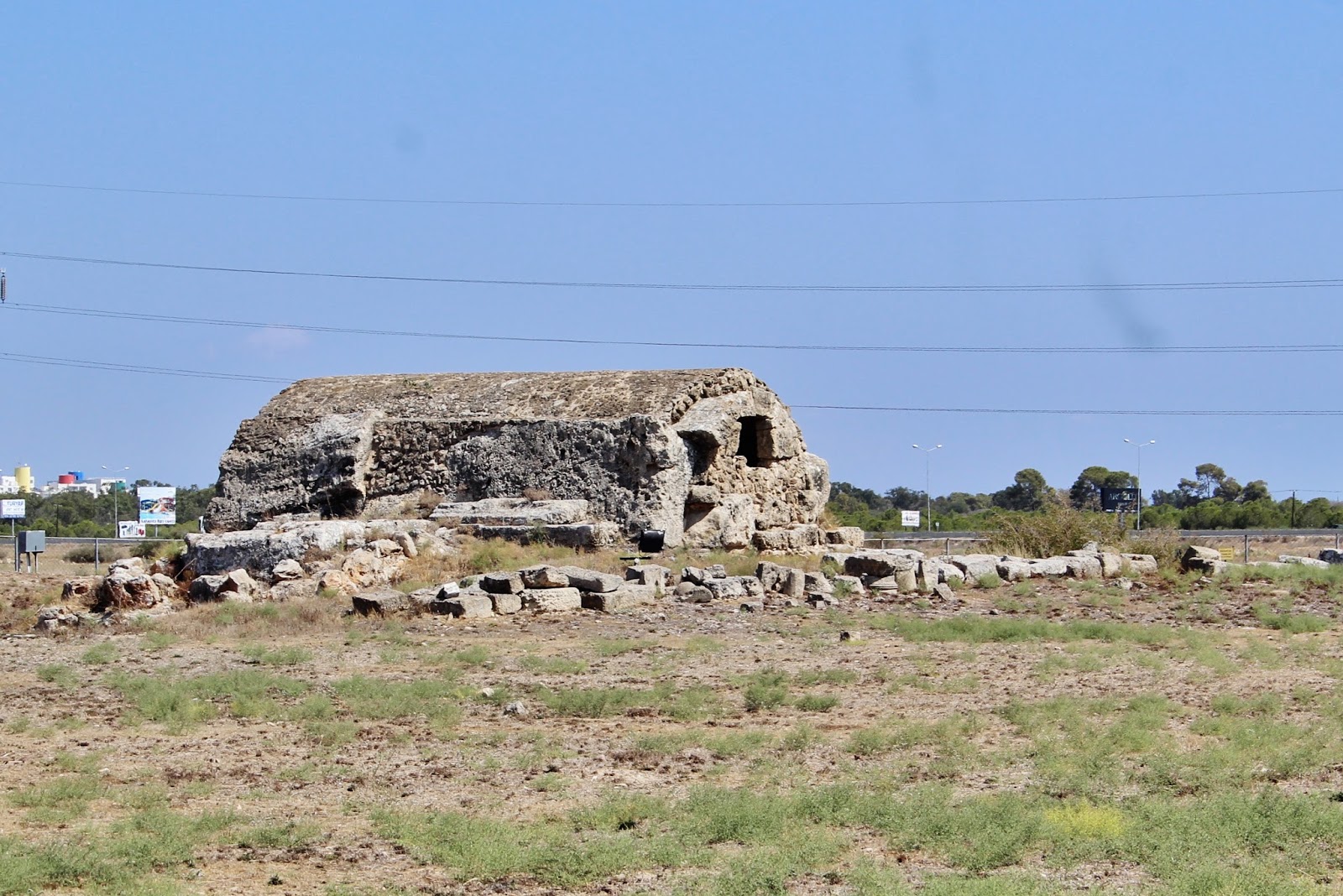
Photos 8/9/2016 by George Konstantinou
 Η Σαλαμίνα ή Σαλαμίς ήταν αρχαία πόλη-κράτος της Κύπρου. Βρισκόταν στη ανατολική ακτή της Κύπρου, στις εκβολές του ποταμού Πεδαίου, 6 χλμ. βόρεια της σύγχρονης Αμμοχώστου.
Ιστορία

 Η πόλη πήρε το όνομά της από τη Σαλαμίνα της Αττικής. Στη σύγχρονη γλωσσολογία, θεωρείται πως το όνομα «Σαλαμίς» προέρχεται από τη ρίζα Σαλ- (άλας· δηλαδή αλμυρό νερό) και -άμις (δηλαδή στη μέση), έτσι Σαλαμίνα είναι (ο τόπος) εν μέσω θαλασσινού νερού. Τα πρώτα αρχαιολογικά ευρήματα δείχνουν ότι η Σαλαμίνα κατοικείται από Αχαιούς από τον δωδέκατο αιώνα π.Χ. (Ύστερη Εποχή του Χαλκού Γ΄). Τα μεταλλεύματα χαλκού της Κύπρου έκαναν το νησί σημαντικό εμπορικό κόμβο. Η πόλη αναφέρεται σε ασσυριακές επιγραφές ως ένα από τα βασίλεια της Κύπρου . Το 877 π.Χ. ο ασσυριακός στρατός έφθασε στις ακτές της Μεσογείου, για πρώτη φορά. Το 708 π.Χ. οι πόλεις-βασίλεια της Κύπρου πρόσφεραν φόρο τιμής στον Σαργών Β΄ της Ασσυρίας. Τα πρώτα νομίσματα κόπηκαν τον 6ο αιώνα π.Χ., με τα περσικά πρότυπα.
 Η Κύπρος ενώ ήταν υπό τον έλεγχο των Ασσυρίων για περίπου 15 χρόνια, οι πόλεις-κράτη του νησιού απολάμβαναν μια σχετική ανεξαρτησία στον βαθμό που κατέβαλλαν δώρα στον βασιλιά των Ασσυρίων. Το γεγονός αυτό επέτρεψε στους βασιλιάδες των διαφόρων πόλεων να συσσωρεύουν πλούτο και δύναμη. Ορισμένες ταφές στους "βασιλικούς τάφους" της Σαλαμίνας είναι άμεσα συνδεδεμένες με τις Ομηρικές τελετές, όπως η θυσία των αλόγων τα οποία τα θυσίαζαν στον τάφο του νεκρού και οι προσφορές σε λάδι που βρέθηκαν μέσα στους τάφους. Ορισμένοι μελετητές έχουν ερμηνεύσει αυτό το φαινόμενο, ως αποτέλεσμα της επιρροής του Ομηρικά Έπη στην Κύπρο. Οι περισσότερες από τις σοβαρές αγαθά προέρχονται από την Εγγύς Ανατολή και την Αίγυπτο.
 Σύμφωνα με αρχαιολογικά ευρήματα, ιδρυτής της Σαλαμίνας ήταν ο Τεύκρος γιος του Τελαμώνα , που έδωσε στην πόλη το όνομα της πατρίδας του. Ο Τεύκρος βρέθηκε στην Κύπρο μετά το τέλος του Τρωικού πολέμου εκδιωκόμενος από τον πατέρα του, επειδή δεν είχε αποτρέψει τον θάνατο του αδελφού του Αίαντα.
 Το 450 π.Χ. η Σαλαμίνα έγινε πεδίο χερσαίας αλλά και θαλάσσιας μάχης μεταξύ Αθήνας και Περσών. (Αυτό δεν πρέπει να συγχέεται με την προηγούμενη Ναυμαχία της Σαλαμίνας το 480 π.Χ. μεταξύ των Ελλήνων και των Περσών στη Σαλαμίνα τη Αττικής.)
 Την ιστορία της Σαλαμίνας κατά τη διάρκεια των πρώτων αρχαϊκών και κλασικών χρόνων αντικατοπτρίζει στις αφηγήσεις του ο Έλληνας ιστορικός Ηρόδοτος και ο , πολύ αργότερα, ο Έλληνας ρήτορας Ισοκράτης. Η πόλη ήταν τότε η πρωτεύουσα του νησιού και οδήγησε τις άλλες κυπριακές πόλεις στις προσπάθειές τους για την απελευθέρωσή τους από την περσική κυριαρχία. Ο σημαντικότερος ηγεμόνας του βασιλείου της Σαλαμίνας ήταν ο Ευαγόρας Α΄ (410-374 π.Χ.), ο οποίος στην πραγματικότητα ήταν ηγεμόνας όλου του νησιού, με τους αγώνες του κέρδισε την ανεξαρτησία από την Περσία. Τη Σαλαμίνα πολιόρκησε και κατέλαβε ο Αρταξέρξης Γ΄. Στη βασιλεία του Ευαγόρα η ελληνική τέχνη και ο πολιτισμός άνθισαν στην πόλη . Ένα μνημείο, γεγονός το οποίο καταδεικνύει το τέλος των κλασικών χρόνων στη Σαλαμίνα, είναι ο τύμβος, που όταν ανασκάφτηκε αποκάλυψε το κενοτάφιο του Νικοκρέων, ο οποίος ήταν ο τελευταίος βασιλιάς της Σαλαμίνας. Από την μνημειώδη εξέδρα βρέθηκαν διάφορες πήλινες κεφαλές, ορισμένες από τις οποίες είναι πορτρέτα, ίσως των μελών της βασιλικής οικογένειας που τιμήθηκαν μετά τους τραγικό θάνατο στην πυρά.

Μετά τον θάνατο του Μεγάλου Αλεξάνδρου όταν ο Πτολεμαίος κατέλαβε την Κύπρο ο Νικοκρέων αναγκάστηκε να αυτοκτονήσει το 311 π.Χ. . Στη θέση του ήρθε ο βασιλιάς Μενέλαος, ο οποίος ήταν αδελφός του Πτολεμαίου και ανέλαβε κυβερνήτης όλης της Κύπρου κάνοντας την Σαλαμίνα πρωτεύουσα της. Πιστεύεται ότι ο τάφος του Νικοκρέοντος βρίσκεται σε κάποιον από τους τύμβους που δεν έχουν ανασκαφή ακόμα στην Έγκωμη.
 Το 306 π.Χ. στη Σαλαμίνα έγινε ναυμαχία μεταξύ των στόλων του Δημητρίου της Μακεδονίας και του Πτολεμαίου, ο Δημήτριος κέρδισε την ναυμαχία και κατέλαβε το νησί.
 Στη ρωμαϊκή εποχή, η Σαλαμίνα ήταν μέρος της Ρωμαϊκής επαρχίας της Κιλικίας. Η έδρα του κυβερνήτη μεταφέρθηκε στην Πάφο. Η πόλη επλήγη σε μεγάλο βαθμό κατά τη διάρκεια της εβραϊκής ανύψωσης . Αν και η Σαλαμίνα έπαψε να είναι η πρωτεύουσα της Κύπρου από την ελληνιστική εποχή και μετά, όταν αντικαταστάθηκε από την Πάφο, ο πλούτος και η σημασία της δεν μειώθηκε. Η πόλη ήταν ευνοήθηκε ιδιαίτερα από τους Ρωμαίους αυτοκράτορες Τραϊανό και Αδριανό που κατασκεύασαν πολλά δημόσια κτίρια.
Στο πρώτο του ταξίδι ο Απόστολος Παύλος πέρασε και κήρυξε τον χριστιανισμό στην Σαλαμίνα (Πράξεις 13:5), πριν προχωρήσει στο υπόλοιπο νησί.
 Ο Κύπριος Άγιος Βαρνάβας έφερε τον Χριστιανισμό στην Κύπρο κατά το πρώτο αιώνα μ.Χ.. Η παράδοση αναφέρει ότι ο Βαρνάβας κήρυξε στην Αλεξάνδρεια και στη Ρώμη, και πέθανε δια λιθοβολισμού στην Σαλαμίνα το 61 μ.Χ. . Αυτός θεωρείται ο ιδρυτής της κυπριακής Εκκλησίας. Τα οστά του πιστεύεται ότι βρίσκονται στην ομώνυμη Ιερά Μονή.
 Μεγάλοι σεισμοί κατέστρεψαν τη Σαλαμίνα στις αρχές του 4ου αιώνα. Η πόλη ανοικοδομήθηκε από τον Κωνστάντιο Β΄ (337-361 μ.χ.) με το όνομα Κωνσταντία και έγινε έδρα επισκόπου με γνωστότερο επίσκοπο τον Άγιο Επιφάνιο. Ο Αυτοκράτορας Κωνστάντιος Β΄ επίσης απάλλαξε τη Σαλαμίνα από την καταβολή φόρων για ένα σύντομο χρονικό διάστημα και έτσι η νέα πόλη, ξαναχτίστηκε σε μικρότερη κλίμακα, πήρε το όνομά του Κωνσταντία. Οι φερτές ύλες του Πεδαίου έφραξαν το λιμάνι της πόλης και είχε ως αποτέλεσμα τη σταδιακή παρακμή της . Η Σαλαμίνα τελικά εγκαταλείφθηκε κατά τη διάρκεια της Αραβικών επιδρομών του 7ου αιώνα μ.Χ. . Οι κάτοικοι μετακινήθηκαν σε κοντινή περιοχή και έφτιαξαν μια νέα πόλη με το όνομα Αρσινόη η οποία εξελίχτηκε στην σημερινή Αμμόχωστο.

Ανασκαφές
 Οι ανασκαφές στην Σαλαμίνα ξεκίνησαν το 1952 και ήταν σε εξέλιξη μέχρι το 1974. Πριν από την τουρκική εισβολή υπήρξε μεγάλη αρχαιολογική δραστηριότητα , η γαλλική αποστολή έκανε ανασκαφές στην Έγκωμη, άλλη ομάδα στην Σαλαμίνα και το τμήμα αρχαιοτήτων ήταν απασχολημένο σε όλη σχεδόν τη διάρκεια του έτους με τις αποκαταστάσεις μνημείων και συμμετείχε στις ανασκαφές στην Σαλαμίνα.
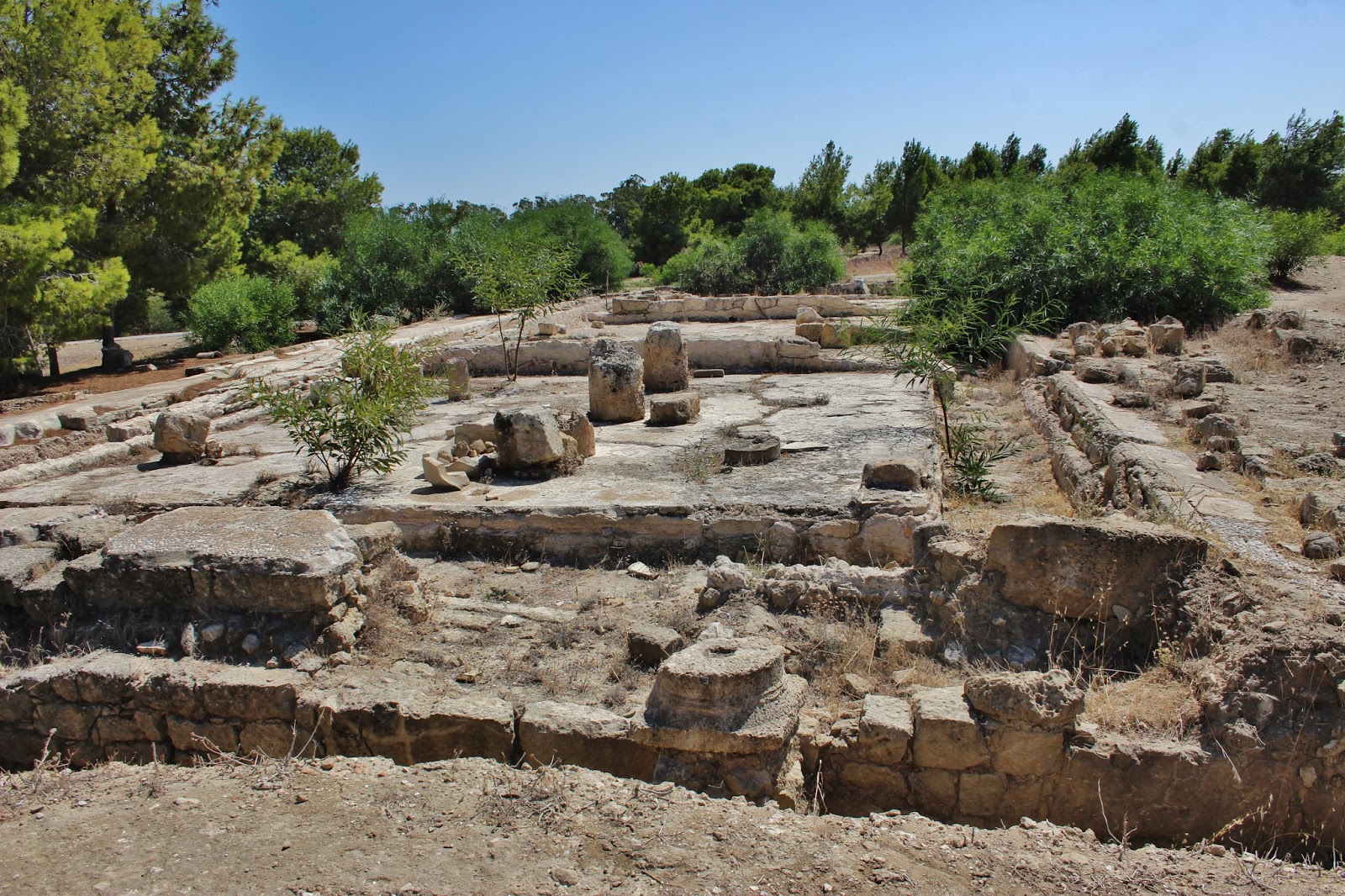
Τα δημόσια κτίρια που αποκαλύφτηκαν μέχρι στιγμής στην αρχαία πόλη της Σαλαμίνας είναι όλα μετά την Κλασική περίοδο. Έχει ανασκαφή ο ναός του Δία Σαλαμίνιου τη λατρεία του οποίου καθιέρωσε στο νησί, σύμφωνα με την παράδοση, ο Τεύκρος. Επίσης έχουν αποκαλυφθεί δημόσια λουτρά , το θέατρο και το γυμνάσιο της πόλης.
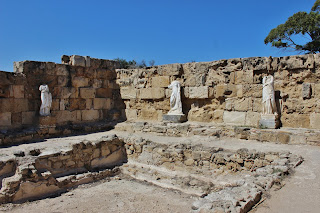
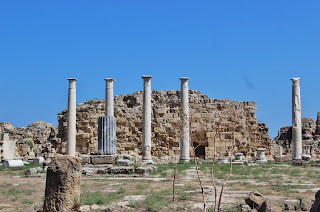
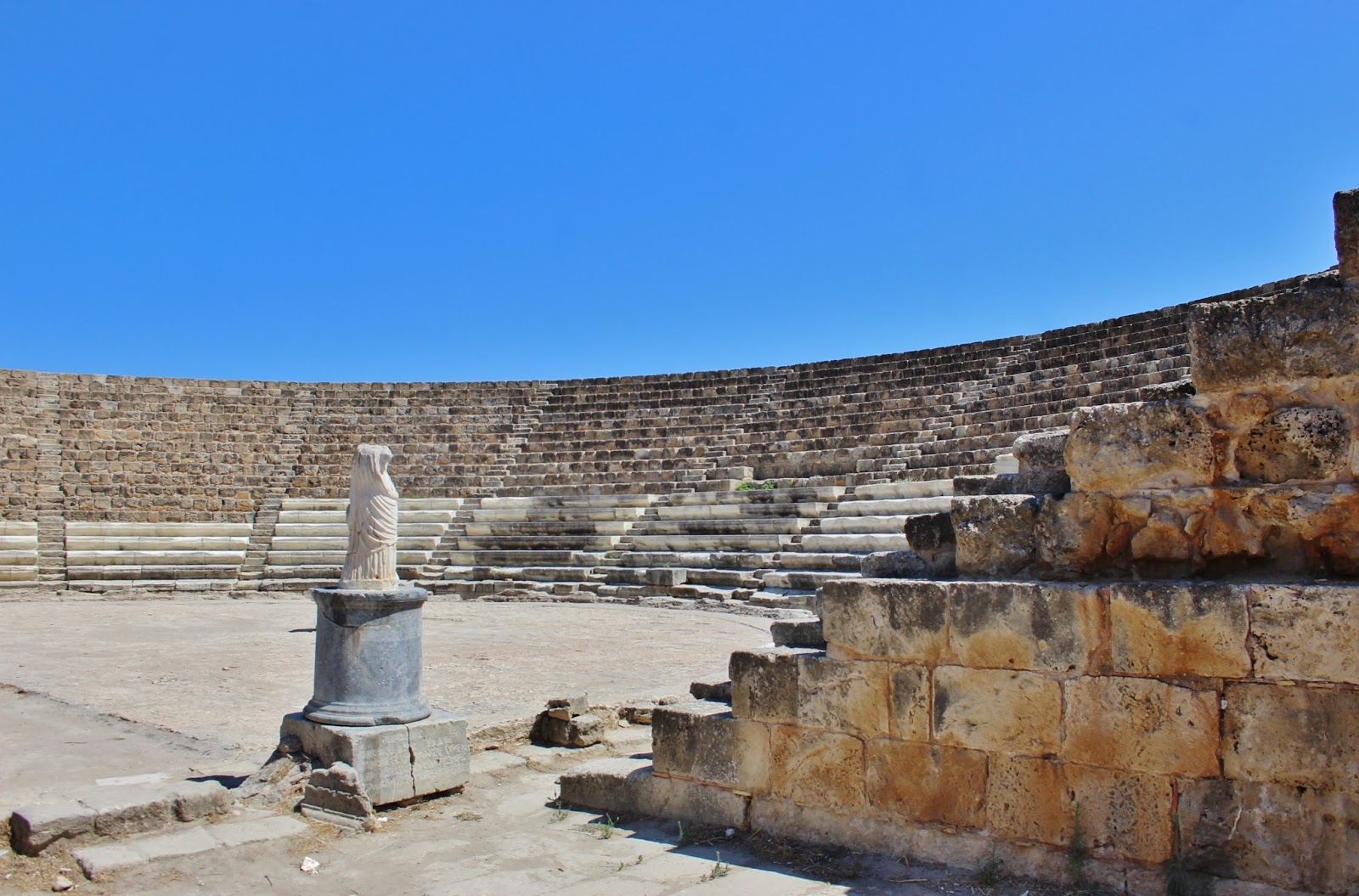
 Υπάρχουν πολλά εκτεταμένα ερείπια. Το θέατρο, το γυμνάσιο έχουν αποκατασταθεί σε μεγάλο βαθμό. Πολλά αγάλματα βρέθηκαν στο Γυμνάσιο τα οποία τα περισσότερα από αυτά ακέφαλα. Το θέατρο είναι Ρωμαϊκό των πρώτων χρόνων της ρωμαϊκής αυτοκρατορίας και μπορούσε να φιλοξενήσει μέχρι και 15,000 θεατές, καταστράφηκε τον 4ο αιώνα.
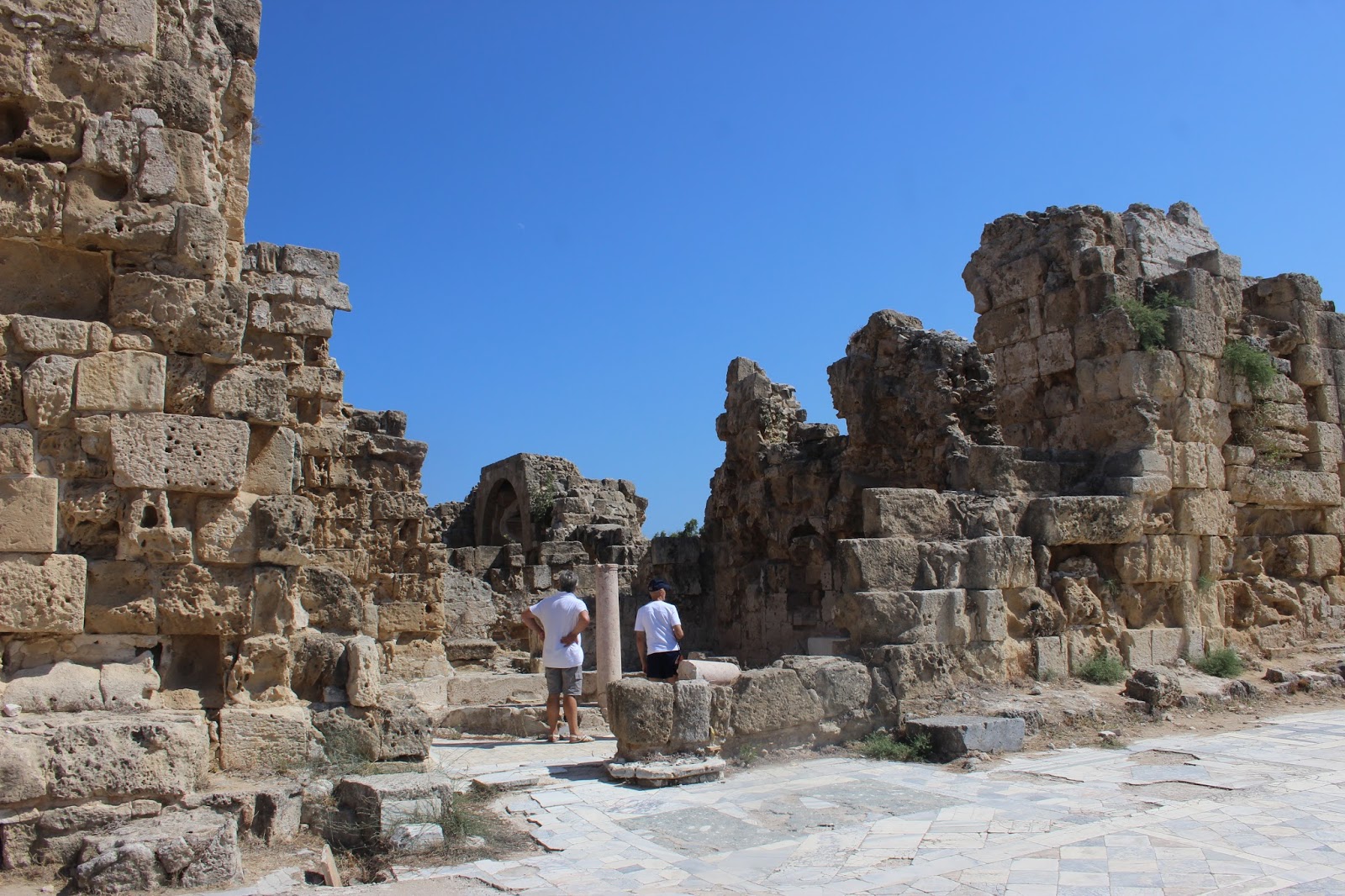
 Βρέθηκαν λουτρά, δημόσια αποχωρητήρια, μωσαϊκά, Ελληνιστική και Ρωμαϊκή Αγορά και ναός του Δία . Από τη Βυζαντινή εποχή η βασιλική του επισκόπου Επιφάνιου (367-403 μ.Χ.) που πιθανότατα ήταν ο μητροπολιτικός ναός της Σαλαμίνας. Ο Άγιος Επιφάνιος είναι θαμμένος στο νότια αψίδα, η εκκλησία περιέχει και βαπτιστήριον . Η εκκλησία καταστράφηκε τον 7ο αιώνα για να αντικατασταθεί από έναν μικρότερο ναό στα νότια της πόλης.
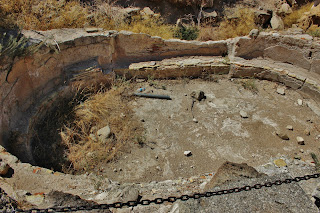
Η πόλη τροφοδοτούνταν με νερό από την Κυθρέα, το υδραγωγείο καταστράφηκε τον 7ο αιώνα. Το νερό συγκεντρώθηκαν σε μια μεγάλη δεξαμενή κοντά στην Αγορά.

 Η νεκρόπολη της Σαλαμίνας καλύπτει 7 τετραγωνικά χιλιόμετρα στα δυτικά της πόλης. Εκεί βρίσκεται και το μουσείο που μέχρι το 1974 είχε όλα τα ευρήματα των ανασκαφών. Οι ταφές χρονολογούνται από τη γεωμετρική έως την ελληνιστική περίοδο. Η πιο γνωστή ταφή είναι οι λεγόμενοι βασιλικοί τάφοι , που έχουν βρεθεί άρματα και πλούσια δώρα προσφορές στου νεκρούς. Ένας τάφος που έχει ανασκαφεί το 1965 από τη Γαλλική Αποστολή του Πανεπιστημίου της Λυών έφερε στο φως έναν πλούσιο σε ευρήματα τάφο που πιστοποιεί τις εμπορικές σχέσεις με την Εγγύς Ανατολή.
 Αν και η Σαλαμίνα διατήρησε άμεσους δεσμούς με την Εγγύς Ανατολή κατά τη διάρκεια του 8ου και 7ου αιώνα π.Χ., υπήρχαν δεσμοί και με την Ελλάδα. Ένας βασιλικός τάφος περιείχε μεγάλο μέρος των ελληνικής κεραμικής των γεωμετρικών χρόνων και πιστεύεται ότι ήταν προίκα Ελληνίδας πριγκίπισσας που παντρεύτηκε μέλος της βασιλικής οικογένειας της Σαλαμίνας. Ελληνική κεραμική βρέθηκε επίσης σε τάφους απλών πολιτών.
 Η πόλη του 11ου αιώνα μ.χ. περιορίστηκε σε μικρή έκταση γύρω από το λιμάνι, αλλά σύντομα επεκτάθηκε προς τα δυτικά για να καταλάβουν την περιοχή που σήμερα καλύπτεται από δάση. Το νεκροταφείο της Σαλαμίνας καλύπτει μια μεγάλη περιοχή από τα δυτικά όρια του δάσους στην Ιερά Μονή του Αγίου Βαρνάβα προς τα δυτικά, προς τα βόρεια και το χωριό Αγίου Σέργιος, και προς τα περίχωρα της Έγκωμης στα νότια. Περιλαμβάνει τάφους που χρονολογούνται από τον 9ο αιώνα μ.Χ. , το μεγαλύτερο μέρος του νεκροταφείου δεν έχει ανασκαφεί και βρίσκετε μέσα στην περιοχή που καλύπτει το δάσος. Μετά την τουρκική εισβολή και το διεθνές εμπάργκο σταμάτησαν και οι διενέργειες ανασκαφών.
Βιβλιογραφία
Αθανάσιου Σακελάριου, Τα Κυπριακά ήτοι, πραγματεία περί γεωγραφίας, αρχαιολογία, στατιστικής, μυθολογίας και διαλέκτου της Κύπρου, τόμος 1, Αθήνα 1855

Πηγές
Vassos Karageorghis, Salamis in Cyprus, Homeric, Hellenistic and Roman (1969), ISBN 0-500-39006-1.
Walter Burkert, 1992. The Orientalizing Revolution: Near Eastern Influence on Greek Culture in the Early Archaic Age (Harvard University Press)
Σπυρίδων Λάμπρος, Ιστορικά μελετήματα, Εν Αθήναις, Εκ του τυπογραφείου «ο Παλαμήδης», 1884
 Από τη Βικιπαίδεια, την ελεύθερη εγκυκλοπαίδεια
 Salamis (Ancient Greek: Σαλαμίς) is an ancient Greek city-state on the east coast of Cyprus, at the mouth of the river Pedieos, 6 km north of modern Famagusta. According to tradition, the founder of Salamis was Teucer, son of Telamon, who could not return home after the Trojan war because he had failed to avenge his brother Ajax.
Early history
 The earliest archaeological finds go back to the eleventh century BC (Late Bronze Age III). The copper ores of Cyprus made the island an essential node in the earliest trade networks, and Cyprus was a source of the orientalizing cultural traits of mainland Greece at the end of the Greek Dark Ages, hypothesized by Walter Burkert in 1992. Children's burials in Canaanite jars indicate a Phoenician presence. A harbour and a cemetery from this period have been excavated. The town is mentioned in Assyrian inscriptions as one of the kingdoms of Iadnana (Cyprus).[1] In 877 an Assyrian army reached the Mediterranean shores for the first time. In 708 the city-kings of Cyprus paid homage to Sargon II of Assyria (Burkert). The first coins were minted in the 6th century BC, following Persian prototypes.

 Cyprus was under the control of the Assyrians at this time but the city-states of the island enjoyed a relative independence as long as they paid their tribute to the Assyrian king. This allowed the kings of the various cities to accumulate wealth and power. Certain burial customs observed in the "royal tombs" of Salamis relate directly to Homeric rites, such as the sacrifice of horses in honour of the dead and the offering of jars of olive oil. Some scholars have interpreted this phenomenon as the result of influence of the Homeric Epics in Cyprus. Most of the grave goods come from the Levant or Egypt.
In the Greek period
 This 11th century BC, the town was confined to a rather small area around the harbour but soon expanded westwards to occupy the area, which today is covered by forest. The cemetery of Salamis covers a large area from the western limits of the forest to the Monastery of St. Barnabas to the west, to the outskirts of the village of Ayios Serghios to the north, and to the outskirts of Enkomi village to the south. It contains tombs dating from the 9th century BC down to the Early Christian period. The earlier tombs are within the forest area, near the boundary of the early town.

 Though Salamis maintained direct links with the Near East during the 8th and 7th centuries BC, there were bonds with the Aegean as well. One royal tomb contained a large amount of Greek Geometric pottery and this has been explained as the dowry of a Greek princess who married into the royal family of Salamis. Greek pottery was also found in tombs of ordinary citizens. At this time the Greeks were embarking on an eastward expansion by founding colonies in Asia Minor and Syria; Salamis must have served as an intermediate station; it has even been suggested that Cypriots helped the Greeks in their venture.
 According to the foundation myth, the founder of Salamis is said to be Teucer, son of Telamon, who could not return home after the Trojan war because he had failed to avenge his brother Ajax. There is however some evidence that the area had been occupied long before the alleged arrival of Mycenaeans (at Enkomi) and the town of Salamis was developed as a replacement when Engkomi was isolated from the sea. There is otherwise little direct evidence to support the foundation myth.
Resistance to Persian rule
 In 450 BC, Salamis was the site of a simultaneous land and sea battle between Athens and the Persians. (This is not to be confused with the earlier Battle of Salamis in 480 BC between the Greeks and the Persians at Salamis in Attica.)
 The history of Salamis during the early Archaic and Classical periods is reflected in the narrations of the Greek historian Herodotus and the much later speeches of the Greek orator Isocrates. Salamis was afterwards besieged and conquered by Artaxerxes III. Under King Evagoras (411-374 BC) Greek culture and art flourished in the city and it would be interesting one day when the spade of the archaeologist uncovers public buildings of this period. A monument, which illustrates the end of the Classical period in Salamis, is the tumulus, which covered the cenotaph of Nicocreon, one of the last kings of Salamis, who perished in 311 BC. On its monumental platform were found several clay heads, some of which are portraits, perhaps of members of the royal family who were honoured after their death on the pyre.

Marguerite Yon (archaeologist) claims that "Literary texts and inscriptions suggest that by the Classical period, Kition [in present-day Larnaca] was one of the principal local powers, along with its neighbor Salamis
Alexander the Great and the Roman Empire[edit]
 After Alexander the Great conquered the Persian Empire, Ptolemy I of Egypt ruled the island of Cyprus. He forced Nicocreon, who had been the Ptolemaic governor of the island, to commit suicide in 311 BC, because he did not trust him any more. In his place came king Menelaus, who was the brother of the first Ptolemy. Nicocreon is supposed to be buried in one of the big tumuli near Enkomi. Salamis remained seat of the governor.
 In 306 BC, Salamis was the site of a naval battle between the fleets of Demetrius I of Macedon and Ptolemy I of Egypt. Demetrius won the battle and captured the island.
In Roman times, Salamis was part of the Roman province of Cilicia. The seat of the governor was relocated to Paphos. The town suffered heavily during the Jewish rising of AD 116–117. Although Salamis ceased to be the capital of Cyprus from the Hellenistic period onwards when it was replaced by Paphos, its wealth and importance did not diminish. The city was particularly favoured by the Roman emperors Trajan and Hadrian, who restored and established its public buildings.
In the Roman and Byzantine periods
The "cultural centre" of Salamis during the Roman period was situated at the northernmost part of the city, where a gymnasium, theatre, amphitheatre, stadium and public baths have been revealed. There are baths, public latrines (for 44 users), various little bits of mosaic, a harbour wall, a Hellenistic and Roman agora and a temple of Zeus that had the right to grant asylum. Byzantine remains include the basilica of Bishop Epiphanos (AD 367–403). It served as the metropolitan church of Salamis. St. Epiphanios is buried at the southern apse. The church contains a baptistry heated by hypocausts. The church was destroyed in the 7th century and replaced by a smaller building to the south.
There are very extensive ruins. The theatre, and the gymnasium have been extensively restored. Numerous statues are displayed in the central court of the gymnasium most of which are headless. While a statue of Augustus originally belonged here, some columns and statues originally adorned the theatre and were only brought here after an earthquake in the 4th century. The theatre is of Augustean date. It could house up to 15.000 spectators but was destroyed in the 4th century.
The town was supplied with water by an aquaeduct from Kyhrea, destroyed in the 7th century. The water was collected in a large cistern near the Agora. The necropolis of Salamis covers ca. 7 km² to the west of the town. It contains a museum showing some of the finds. Burials date from the geometric to the Hellenistic period. The best known burials are the so-called Royal-Tombs, containing chariots and extremely rich grave gifts, including imports from Egypt and Syria. A tomb excavated in 1965 by the French Mission of the University of Lyon brought to light an extraordinary wealth of tomb-gifts, which also attest trade relations with the Near East.
Christianity
In what is known as the "First Missionary Journey", Paul the apostle and the Cypriot-born Barnabas made Salamis their first destination, landing there after heading out from Antioch of Syria. There they proclaimed Christ in the Jewish synagogues before proceeding through the rest of the island (Acts 13:1-5). Tradition says that Barnabas preached in Alexandria and Rome, and was stoned to death at Salamis in about 61 CE. He is considered the founder of the Church of Cyprus. His bones are believed to be located in the nearby monastery named after him.
Several earthquakes led to the destruction of Salamis at the beginning of the 4th century. The town was rebuilt under the name of Constantia by Constantius II (337–361) and became an Episcopal seat, the most famous occupant of which was Saint Epiphanius. Emperor Constantius II helped the Salaminians not only for the reconstruction of their city but also he helped them by relieving them from paying taxes for a short period and thus the new city, rebuilt on a smaller scale, was named Constantia. The silting of the harbour led to a gradual decline of the town. Salamis was finally abandoned during the Arab invasions of the 7th century after destructions by Muawiyah I. The inhabitants moved to Arsinoë (Famagusta).
Excavations
Archaeological excavations at the site began in the late nineteenth century under the auspices of the Cyprus Exploration Fund. Many of these finds are now in the British Museum in London.[3]
Excavations at Salamis started again in 1952 and were in progress until 1974. Before the Turkish invasion there was much archaeological activity there; one French Mission was excavating at Enkomi, another at Salamis and the Department of Antiquities was busy almost throughout the year with repairs and restorations of monuments and was engaged in excavations at Salamis. After the Turkish invasion the international embargo has prevented the continuation of the excavations. The site and the museums are maintained by the antiquities service. Important archaeological collections are kept in the St. Barnabas monastery. In the District Archaeological Museum there are marble statues from the gymnasium and the theatre of Salamis, Mycenaean pottery and jewellery from Enkomi and other objects representative of the rich archaeological heritage of the whole district.
The public buildings uncovered at the city site of Salamis date to the post-Classical period. The Temple of Zeus Salaminios, whose cult was established, according to tradition, by Teucer himself, must have existed since the foundation of the city; the extant remains date to the late Hellenistic period. Early excavators discovered in the esplanade of the Temple of Zeus an enormous marble capital carved on each side with a caryatid figure standing between the foreparts of winged bulls. Now in the British Museum's collection,[4] the function of the capital remains unclear, although it does indicate influence from Achaemenid art and is consequently dated to between 300 and 250 BC.
References
Vassos Karageorghis, Salamis in Cyprus, Homeric, Hellenistic and Roman (1969), ISBN 0-500-39006-1.
Walter Burkert, 1992. The Orientalizing Revolution: Near Eastern Influence on Greek Culture in the Early Archaic Age (Harvard University Press)
From Wikipedia, the free encyclopedia








 Η Σαλαμίνα ή Σαλαμίς ήταν αρχαία πόλη-κράτος της Κύπρου. Βρισκόταν στη ανατολική ακτή της Κύπρου, στις εκβολές του ποταμού Πεδαίου, 6 χλμ. βόρεια της σύγχρονης Αμμοχώστου.
Ιστορία

 Η πόλη πήρε το όνομά της από τη Σαλαμίνα της Αττικής. Στη σύγχρονη γλωσσολογία, θεωρείται πως το όνομα «Σαλαμίς» προέρχεται από τη ρίζα Σαλ- (άλας· δηλαδή αλμυρό νερό) και -άμις (δηλαδή στη μέση), έτσι Σαλαμίνα είναι (ο τόπος) εν μέσω θαλασσινού νερού. Τα πρώτα αρχαιολογικά ευρήματα δείχνουν ότι η Σαλαμίνα κατοικείται από Αχαιούς από τον δωδέκατο αιώνα π.Χ. (Ύστερη Εποχή του Χαλκού Γ΄). Τα μεταλλεύματα χαλκού της Κύπρου έκαναν το νησί σημαντικό εμπορικό κόμβο. Η πόλη αναφέρεται σε ασσυριακές επιγραφές ως ένα από τα βασίλεια της Κύπρου . Το 877 π.Χ. ο ασσυριακός στρατός έφθασε στις ακτές της Μεσογείου, για πρώτη φορά. Το 708 π.Χ. οι πόλεις-βασίλεια της Κύπρου πρόσφεραν φόρο τιμής στον Σαργών Β΄ της Ασσυρίας. Τα πρώτα νομίσματα κόπηκαν τον 6ο αιώνα π.Χ., με τα περσικά πρότυπα.
 Η Κύπρος ενώ ήταν υπό τον έλεγχο των Ασσυρίων για περίπου 15 χρόνια, οι πόλεις-κράτη του νησιού απολάμβαναν μια σχετική ανεξαρτησία στον βαθμό που κατέβαλλαν δώρα στον βασιλιά των Ασσυρίων. Το γεγονός αυτό επέτρεψε στους βασιλιάδες των διαφόρων πόλεων να συσσωρεύουν πλούτο και δύναμη. Ορισμένες ταφές στους "βασιλικούς τάφους" της Σαλαμίνας είναι άμεσα συνδεδεμένες με τις Ομηρικές τελετές, όπως η θυσία των αλόγων τα οποία τα θυσίαζαν στον τάφο του νεκρού και οι προσφορές σε λάδι που βρέθηκαν μέσα στους τάφους. Ορισμένοι μελετητές έχουν ερμηνεύσει αυτό το φαινόμενο, ως αποτέλεσμα της επιρροής του Ομηρικά Έπη στην Κύπρο. Οι περισσότερες από τις σοβαρές αγαθά προέρχονται από την Εγγύς Ανατολή και την Αίγυπτο.
 Σύμφωνα με αρχαιολογικά ευρήματα, ιδρυτής της Σαλαμίνας ήταν ο Τεύκρος γιος του Τελαμώνα , που έδωσε στην πόλη το όνομα της πατρίδας του. Ο Τεύκρος βρέθηκε στην Κύπρο μετά το τέλος του Τρωικού πολέμου εκδιωκόμενος από τον πατέρα του, επειδή δεν είχε αποτρέψει τον θάνατο του αδελφού του Αίαντα.
 Το 450 π.Χ. η Σαλαμίνα έγινε πεδίο χερσαίας αλλά και θαλάσσιας μάχης μεταξύ Αθήνας και Περσών. (Αυτό δεν πρέπει να συγχέεται με την προηγούμενη Ναυμαχία της Σαλαμίνας το 480 π.Χ. μεταξύ των Ελλήνων και των Περσών στη Σαλαμίνα τη Αττικής.)
 Την ιστορία της Σαλαμίνας κατά τη διάρκεια των πρώτων αρχαϊκών και κλασικών χρόνων αντικατοπτρίζει στις αφηγήσεις του ο Έλληνας ιστορικός Ηρόδοτος και ο , πολύ αργότερα, ο Έλληνας ρήτορας Ισοκράτης. Η πόλη ήταν τότε η πρωτεύουσα του νησιού και οδήγησε τις άλλες κυπριακές πόλεις στις προσπάθειές τους για την απελευθέρωσή τους από την περσική κυριαρχία. Ο σημαντικότερος ηγεμόνας του βασιλείου της Σαλαμίνας ήταν ο Ευαγόρας Α΄ (410-374 π.Χ.), ο οποίος στην πραγματικότητα ήταν ηγεμόνας όλου του νησιού, με τους αγώνες του κέρδισε την ανεξαρτησία από την Περσία. Τη Σαλαμίνα πολιόρκησε και κατέλαβε ο Αρταξέρξης Γ΄. Στη βασιλεία του Ευαγόρα η ελληνική τέχνη και ο πολιτισμός άνθισαν στην πόλη . Ένα μνημείο, γεγονός το οποίο καταδεικνύει το τέλος των κλασικών χρόνων στη Σαλαμίνα, είναι ο τύμβος, που όταν ανασκάφτηκε αποκάλυψε το κενοτάφιο του Νικοκρέων, ο οποίος ήταν ο τελευταίος βασιλιάς της Σαλαμίνας. Από την μνημειώδη εξέδρα βρέθηκαν διάφορες πήλινες κεφαλές, ορισμένες από τις οποίες είναι πορτρέτα, ίσως των μελών της βασιλικής οικογένειας που τιμήθηκαν μετά τους τραγικό θάνατο στην πυρά.
Μετά τον θάνατο του Μεγάλου Αλεξάνδρου όταν ο Πτολεμαίος κατέλαβε την Κύπρο ο Νικοκρέων αναγκάστηκε να αυτοκτονήσει το 311 π.Χ. . Στη θέση του ήρθε ο βασιλιάς Μενέλαος, ο οποίος ήταν αδελφός του Πτολεμαίου και ανέλαβε κυβερνήτης όλης της Κύπρου κάνοντας την Σαλαμίνα πρωτεύουσα της. Πιστεύεται ότι ο τάφος του Νικοκρέοντος βρίσκεται σε κάποιον από τους τύμβους που δεν έχουν ανασκαφή ακόμα στην Έγκωμη.
 Το 306 π.Χ. στη Σαλαμίνα έγινε ναυμαχία μεταξύ των στόλων του Δημητρίου της Μακεδονίας και του Πτολεμαίου, ο Δημήτριος κέρδισε την ναυμαχία και κατέλαβε το νησί.
 Στη ρωμαϊκή εποχή, η Σαλαμίνα ήταν μέρος της Ρωμαϊκής επαρχίας της Κιλικίας. Η έδρα του κυβερνήτη μεταφέρθηκε στην Πάφο. Η πόλη επλήγη σε μεγάλο βαθμό κατά τη διάρκεια της εβραϊκής ανύψωσης . Αν και η Σαλαμίνα έπαψε να είναι η πρωτεύουσα της Κύπρου από την ελληνιστική εποχή και μετά, όταν αντικαταστάθηκε από την Πάφο, ο πλούτος και η σημασία της δεν μειώθηκε. Η πόλη ήταν ευνοήθηκε ιδιαίτερα από τους Ρωμαίους αυτοκράτορες Τραϊανό και Αδριανό που κατασκεύασαν πολλά δημόσια κτίρια.
Στο πρώτο του ταξίδι ο Απόστολος Παύλος πέρασε και κήρυξε τον χριστιανισμό στην Σαλαμίνα (Πράξεις 13:5), πριν προχωρήσει στο υπόλοιπο νησί.
 Ο Κύπριος Άγιος Βαρνάβας έφερε τον Χριστιανισμό στην Κύπρο κατά το πρώτο αιώνα μ.Χ.. Η παράδοση αναφέρει ότι ο Βαρνάβας κήρυξε στην Αλεξάνδρεια και στη Ρώμη, και πέθανε δια λιθοβολισμού στην Σαλαμίνα το 61 μ.Χ. . Αυτός θεωρείται ο ιδρυτής της κυπριακής Εκκλησίας. Τα οστά του πιστεύεται ότι βρίσκονται στην ομώνυμη Ιερά Μονή.
 Μεγάλοι σεισμοί κατέστρεψαν τη Σαλαμίνα στις αρχές του 4ου αιώνα. Η πόλη ανοικοδομήθηκε από τον Κωνστάντιο Β΄ (337-361 μ.χ.) με το όνομα Κωνσταντία και έγινε έδρα επισκόπου με γνωστότερο επίσκοπο τον Άγιο Επιφάνιο. Ο Αυτοκράτορας Κωνστάντιος Β΄ επίσης απάλλαξε τη Σαλαμίνα από την καταβολή φόρων για ένα σύντομο χρονικό διάστημα και έτσι η νέα πόλη, ξαναχτίστηκε σε μικρότερη κλίμακα, πήρε το όνομά του Κωνσταντία. Οι φερτές ύλες του Πεδαίου έφραξαν το λιμάνι της πόλης και είχε ως αποτέλεσμα τη σταδιακή παρακμή της . Η Σαλαμίνα τελικά εγκαταλείφθηκε κατά τη διάρκεια της Αραβικών επιδρομών του 7ου αιώνα μ.Χ. . Οι κάτοικοι μετακινήθηκαν σε κοντινή περιοχή και έφτιαξαν μια νέα πόλη με το όνομα Αρσινόη η οποία εξελίχτηκε στην σημερινή Αμμόχωστο.
Ανασκαφές
 Οι ανασκαφές στην Σαλαμίνα ξεκίνησαν το 1952 και ήταν σε εξέλιξη μέχρι το 1974. Πριν από την τουρκική εισβολή υπήρξε μεγάλη αρχαιολογική δραστηριότητα , η γαλλική αποστολή έκανε ανασκαφές στην Έγκωμη, άλλη ομάδα στην Σαλαμίνα και το τμήμα αρχαιοτήτων ήταν απασχολημένο σε όλη σχεδόν τη διάρκεια του έτους με τις αποκαταστάσεις μνημείων και συμμετείχε στις ανασκαφές στην Σαλαμίνα.
Τα δημόσια κτίρια που αποκαλύφτηκαν μέχρι στιγμής στην αρχαία πόλη της Σαλαμίνας είναι όλα μετά την Κλασική περίοδο. Έχει ανασκαφή ο ναός του Δία Σαλαμίνιου τη λατρεία του οποίου καθιέρωσε στο νησί, σύμφωνα με την παράδοση, ο Τεύκρος. Επίσης έχουν αποκαλυφθεί δημόσια λουτρά , το θέατρο και το γυμνάσιο της πόλης.
 Υπάρχουν πολλά εκτεταμένα ερείπια. Το θέατρο, το γυμνάσιο έχουν αποκατασταθεί σε μεγάλο βαθμό. Πολλά αγάλματα βρέθηκαν στο Γυμνάσιο τα οποία τα περισσότερα από αυτά ακέφαλα. Το θέατρο είναι Ρωμαϊκό των πρώτων χρόνων της ρωμαϊκής αυτοκρατορίας και μπορούσε να φιλοξενήσει μέχρι και 15,000 θεατές, καταστράφηκε τον 4ο αιώνα.
 Βρέθηκαν λουτρά, δημόσια αποχωρητήρια, μωσαϊκά, Ελληνιστική και Ρωμαϊκή Αγορά και ναός του Δία . Από τη Βυζαντινή εποχή η βασιλική του επισκόπου Επιφάνιου (367-403 μ.Χ.) που πιθανότατα ήταν ο μητροπολιτικός ναός της Σαλαμίνας. Ο Άγιος Επιφάνιος είναι θαμμένος στο νότια αψίδα, η εκκλησία περιέχει και βαπτιστήριον . Η εκκλησία καταστράφηκε τον 7ο αιώνα για να αντικατασταθεί από έναν μικρότερο ναό στα νότια της πόλης.
Η πόλη τροφοδοτούνταν με νερό από την Κυθρέα, το υδραγωγείο καταστράφηκε τον 7ο αιώνα. Το νερό συγκεντρώθηκαν σε μια μεγάλη δεξαμενή κοντά στην Αγορά.

 Η νεκρόπολη της Σαλαμίνας καλύπτει 7 τετραγωνικά χιλιόμετρα στα δυτικά της πόλης. Εκεί βρίσκεται και το μουσείο που μέχρι το 1974 είχε όλα τα ευρήματα των ανασκαφών. Οι ταφές χρονολογούνται από τη γεωμετρική έως την ελληνιστική περίοδο. Η πιο γνωστή ταφή είναι οι λεγόμενοι βασιλικοί τάφοι , που έχουν βρεθεί άρματα και πλούσια δώρα προσφορές στου νεκρούς. Ένας τάφος που έχει ανασκαφεί το 1965 από τη Γαλλική Αποστολή του Πανεπιστημίου της Λυών έφερε στο φως έναν πλούσιο σε ευρήματα τάφο που πιστοποιεί τις εμπορικές σχέσεις με την Εγγύς Ανατολή.
 Αν και η Σαλαμίνα διατήρησε άμεσους δεσμούς με την Εγγύς Ανατολή κατά τη διάρκεια του 8ου και 7ου αιώνα π.Χ., υπήρχαν δεσμοί και με την Ελλάδα. Ένας βασιλικός τάφος περιείχε μεγάλο μέρος των ελληνικής κεραμικής των γεωμετρικών χρόνων και πιστεύεται ότι ήταν προίκα Ελληνίδας πριγκίπισσας που παντρεύτηκε μέλος της βασιλικής οικογένειας της Σαλαμίνας. Ελληνική κεραμική βρέθηκε επίσης σε τάφους απλών πολιτών.
 Η πόλη του 11ου αιώνα μ.χ. περιορίστηκε σε μικρή έκταση γύρω από το λιμάνι, αλλά σύντομα επεκτάθηκε προς τα δυτικά για να καταλάβουν την περιοχή που σήμερα καλύπτεται από δάση. Το νεκροταφείο της Σαλαμίνας καλύπτει μια μεγάλη περιοχή από τα δυτικά όρια του δάσους στην Ιερά Μονή του Αγίου Βαρνάβα προς τα δυτικά, προς τα βόρεια και το χωριό Αγίου Σέργιος, και προς τα περίχωρα της Έγκωμης στα νότια. Περιλαμβάνει τάφους που χρονολογούνται από τον 9ο αιώνα μ.Χ. , το μεγαλύτερο μέρος του νεκροταφείου δεν έχει ανασκαφεί και βρίσκετε μέσα στην περιοχή που καλύπτει το δάσος. Μετά την τουρκική εισβολή και το διεθνές εμπάργκο σταμάτησαν και οι διενέργειες ανασκαφών.
Βιβλιογραφία
Αθανάσιου Σακελάριου, Τα Κυπριακά ήτοι, πραγματεία περί γεωγραφίας, αρχαιολογία, στατιστικής, μυθολογίας και διαλέκτου της Κύπρου, τόμος 1, Αθήνα 1855

Πηγές
Vassos Karageorghis, Salamis in Cyprus, Homeric, Hellenistic and Roman (1969), ISBN 0-500-39006-1.
Walter Burkert, 1992. The Orientalizing Revolution: Near Eastern Influence on Greek Culture in the Early Archaic Age (Harvard University Press)
Σπυρίδων Λάμπρος, Ιστορικά μελετήματα, Εν Αθήναις, Εκ του τυπογραφείου «ο Παλαμήδης», 1884
 Από τη Βικιπαίδεια, την ελεύθερη εγκυκλοπαίδεια
 Salamis (Ancient Greek: Σαλαμίς) is an ancient Greek city-state on the east coast of Cyprus, at the mouth of the river Pedieos, 6 km north of modern Famagusta. According to tradition, the founder of Salamis was Teucer, son of Telamon, who could not return home after the Trojan war because he had failed to avenge his brother Ajax.
Early history
 The earliest archaeological finds go back to the eleventh century BC (Late Bronze Age III). The copper ores of Cyprus made the island an essential node in the earliest trade networks, and Cyprus was a source of the orientalizing cultural traits of mainland Greece at the end of the Greek Dark Ages, hypothesized by Walter Burkert in 1992. Children's burials in Canaanite jars indicate a Phoenician presence. A harbour and a cemetery from this period have been excavated. The town is mentioned in Assyrian inscriptions as one of the kingdoms of Iadnana (Cyprus).[1] In 877 an Assyrian army reached the Mediterranean shores for the first time. In 708 the city-kings of Cyprus paid homage to Sargon II of Assyria (Burkert). The first coins were minted in the 6th century BC, following Persian prototypes.
 Cyprus was under the control of the Assyrians at this time but the city-states of the island enjoyed a relative independence as long as they paid their tribute to the Assyrian king. This allowed the kings of the various cities to accumulate wealth and power. Certain burial customs observed in the "royal tombs" of Salamis relate directly to Homeric rites, such as the sacrifice of horses in honour of the dead and the offering of jars of olive oil. Some scholars have interpreted this phenomenon as the result of influence of the Homeric Epics in Cyprus. Most of the grave goods come from the Levant or Egypt.
In the Greek period
 This 11th century BC, the town was confined to a rather small area around the harbour but soon expanded westwards to occupy the area, which today is covered by forest. The cemetery of Salamis covers a large area from the western limits of the forest to the Monastery of St. Barnabas to the west, to the outskirts of the village of Ayios Serghios to the north, and to the outskirts of Enkomi village to the south. It contains tombs dating from the 9th century BC down to the Early Christian period. The earlier tombs are within the forest area, near the boundary of the early town.
 Though Salamis maintained direct links with the Near East during the 8th and 7th centuries BC, there were bonds with the Aegean as well. One royal tomb contained a large amount of Greek Geometric pottery and this has been explained as the dowry of a Greek princess who married into the royal family of Salamis. Greek pottery was also found in tombs of ordinary citizens. At this time the Greeks were embarking on an eastward expansion by founding colonies in Asia Minor and Syria; Salamis must have served as an intermediate station; it has even been suggested that Cypriots helped the Greeks in their venture.
 According to the foundation myth, the founder of Salamis is said to be Teucer, son of Telamon, who could not return home after the Trojan war because he had failed to avenge his brother Ajax. There is however some evidence that the area had been occupied long before the alleged arrival of Mycenaeans (at Enkomi) and the town of Salamis was developed as a replacement when Engkomi was isolated from the sea. There is otherwise little direct evidence to support the foundation myth.
Resistance to Persian rule
 In 450 BC, Salamis was the site of a simultaneous land and sea battle between Athens and the Persians. (This is not to be confused with the earlier Battle of Salamis in 480 BC between the Greeks and the Persians at Salamis in Attica.)
 The history of Salamis during the early Archaic and Classical periods is reflected in the narrations of the Greek historian Herodotus and the much later speeches of the Greek orator Isocrates. Salamis was afterwards besieged and conquered by Artaxerxes III. Under King Evagoras (411-374 BC) Greek culture and art flourished in the city and it would be interesting one day when the spade of the archaeologist uncovers public buildings of this period. A monument, which illustrates the end of the Classical period in Salamis, is the tumulus, which covered the cenotaph of Nicocreon, one of the last kings of Salamis, who perished in 311 BC. On its monumental platform were found several clay heads, some of which are portraits, perhaps of members of the royal family who were honoured after their death on the pyre.
Marguerite Yon (archaeologist) claims that "Literary texts and inscriptions suggest that by the Classical period, Kition [in present-day Larnaca] was one of the principal local powers, along with its neighbor Salamis
Alexander the Great and the Roman Empire[edit]
 After Alexander the Great conquered the Persian Empire, Ptolemy I of Egypt ruled the island of Cyprus. He forced Nicocreon, who had been the Ptolemaic governor of the island, to commit suicide in 311 BC, because he did not trust him any more. In his place came king Menelaus, who was the brother of the first Ptolemy. Nicocreon is supposed to be buried in one of the big tumuli near Enkomi. Salamis remained seat of the governor.
 In 306 BC, Salamis was the site of a naval battle between the fleets of Demetrius I of Macedon and Ptolemy I of Egypt. Demetrius won the battle and captured the island.
In Roman times, Salamis was part of the Roman province of Cilicia. The seat of the governor was relocated to Paphos. The town suffered heavily during the Jewish rising of AD 116–117. Although Salamis ceased to be the capital of Cyprus from the Hellenistic period onwards when it was replaced by Paphos, its wealth and importance did not diminish. The city was particularly favoured by the Roman emperors Trajan and Hadrian, who restored and established its public buildings.
In the Roman and Byzantine periods
The "cultural centre" of Salamis during the Roman period was situated at the northernmost part of the city, where a gymnasium, theatre, amphitheatre, stadium and public baths have been revealed. There are baths, public latrines (for 44 users), various little bits of mosaic, a harbour wall, a Hellenistic and Roman agora and a temple of Zeus that had the right to grant asylum. Byzantine remains include the basilica of Bishop Epiphanos (AD 367–403). It served as the metropolitan church of Salamis. St. Epiphanios is buried at the southern apse. The church contains a baptistry heated by hypocausts. The church was destroyed in the 7th century and replaced by a smaller building to the south.
There are very extensive ruins. The theatre, and the gymnasium have been extensively restored. Numerous statues are displayed in the central court of the gymnasium most of which are headless. While a statue of Augustus originally belonged here, some columns and statues originally adorned the theatre and were only brought here after an earthquake in the 4th century. The theatre is of Augustean date. It could house up to 15.000 spectators but was destroyed in the 4th century.
The town was supplied with water by an aquaeduct from Kyhrea, destroyed in the 7th century. The water was collected in a large cistern near the Agora. The necropolis of Salamis covers ca. 7 km² to the west of the town. It contains a museum showing some of the finds. Burials date from the geometric to the Hellenistic period. The best known burials are the so-called Royal-Tombs, containing chariots and extremely rich grave gifts, including imports from Egypt and Syria. A tomb excavated in 1965 by the French Mission of the University of Lyon brought to light an extraordinary wealth of tomb-gifts, which also attest trade relations with the Near East.
Christianity
In what is known as the "First Missionary Journey", Paul the apostle and the Cypriot-born Barnabas made Salamis their first destination, landing there after heading out from Antioch of Syria. There they proclaimed Christ in the Jewish synagogues before proceeding through the rest of the island (Acts 13:1-5). Tradition says that Barnabas preached in Alexandria and Rome, and was stoned to death at Salamis in about 61 CE. He is considered the founder of the Church of Cyprus. His bones are believed to be located in the nearby monastery named after him.
Several earthquakes led to the destruction of Salamis at the beginning of the 4th century. The town was rebuilt under the name of Constantia by Constantius II (337–361) and became an Episcopal seat, the most famous occupant of which was Saint Epiphanius. Emperor Constantius II helped the Salaminians not only for the reconstruction of their city but also he helped them by relieving them from paying taxes for a short period and thus the new city, rebuilt on a smaller scale, was named Constantia. The silting of the harbour led to a gradual decline of the town. Salamis was finally abandoned during the Arab invasions of the 7th century after destructions by Muawiyah I. The inhabitants moved to Arsinoë (Famagusta).
Excavations
Archaeological excavations at the site began in the late nineteenth century under the auspices of the Cyprus Exploration Fund. Many of these finds are now in the British Museum in London.[3]
Excavations at Salamis started again in 1952 and were in progress until 1974. Before the Turkish invasion there was much archaeological activity there; one French Mission was excavating at Enkomi, another at Salamis and the Department of Antiquities was busy almost throughout the year with repairs and restorations of monuments and was engaged in excavations at Salamis. After the Turkish invasion the international embargo has prevented the continuation of the excavations. The site and the museums are maintained by the antiquities service. Important archaeological collections are kept in the St. Barnabas monastery. In the District Archaeological Museum there are marble statues from the gymnasium and the theatre of Salamis, Mycenaean pottery and jewellery from Enkomi and other objects representative of the rich archaeological heritage of the whole district.
The public buildings uncovered at the city site of Salamis date to the post-Classical period. The Temple of Zeus Salaminios, whose cult was established, according to tradition, by Teucer himself, must have existed since the foundation of the city; the extant remains date to the late Hellenistic period. Early excavators discovered in the esplanade of the Temple of Zeus an enormous marble capital carved on each side with a caryatid figure standing between the foreparts of winged bulls. Now in the British Museum's collection,[4] the function of the capital remains unclear, although it does indicate influence from Achaemenid art and is consequently dated to between 300 and 250 BC.
References
Vassos Karageorghis, Salamis in Cyprus, Homeric, Hellenistic and Roman (1969), ISBN 0-500-39006-1.
Walter Burkert, 1992. The Orientalizing Revolution: Near Eastern Influence on Greek Culture in the Early Archaic Age (Harvard University Press)
From Wikipedia, the free encyclopedia








See also