The rich and rare biodiversity in Cyprus. The Cyprus biodiversity includes 1908 plants, 780 seashells, 250 fishes, more than 7.000 insects, 410 birds including migratory, 31 mammals, 9 snakes, 11 lizards,three amphibians, 120 land snails, fungi estimated 5-8 thousandand and three turtles.These numbers continually increase as a result of researc. Also see All about Cyprus.
From George Konstantinou. Email -
fanigeorge@hotmail.com -
Το υλικό της ιστοσελίδας αποτελεί πνευματική ιδιοκτησία.
Kuhl's pipistrelle (Pipistrellus kuhlii) is a species of vesper bat that occurs in large areas of North Africa, Southern Europe and West Asia. It lives in temperate forests, subtropical or tropical dry shrubland, Mediterranean-type shrubby vegetation, temperate grassland, rural gardens, and urban areas. It is a rare and infrequent visitor to Britain, usually only detected by sound-recordings.
Taxonomy
Kuhl's pipistrelle was first named in 1817, under the name Vespertilio kuhlii, in a work by Heinrich Kuhl entitled Die deutschen Fledermäuse ("The bats of Germany"). The specific epithet was chosen by Johann Natterer, who had collected the first specimens, and commemorates Kuhl; under the rules of the ICZN, however, Kuhl himself is regarded as the authority, as the first to report the name.
The population of Algeria, Egypt, Libya, Sudan was formerly known as Pipistrellus deserti. This taxon is now considered to be a junior synonym of Pipistrellus kuhlii
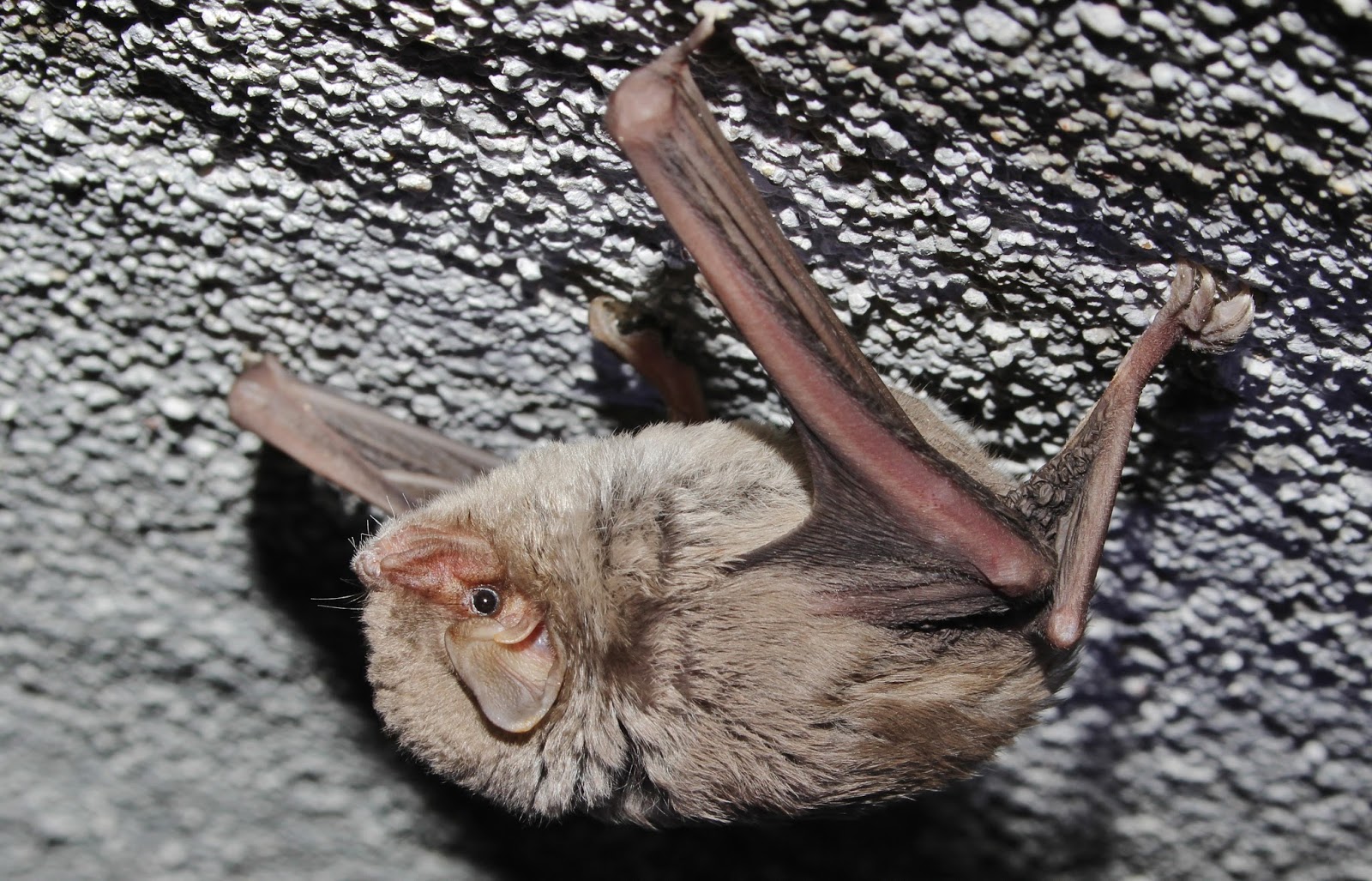
The common bent-wing bat, Schreibers' long-fingered bat, or Schreibers' bat (Miniopterus schreibersii) is a species of vesper bat in the family Vespertilionidae. It is a species of subtropical origin distributed throughout the southern Palearctic, Ethiopic, Oriental, and Australian regions. In Europe, it is present in the southern half from Iberia to the Caucasus, with the largest populations found in the warmer Mediterranean area.
The common bent-wing bat is a bat that forms major colonies and the longest period of torpor (hibernation) observed was about 12 days. These colonies can range anywhere from a few dozen or several million bats. Most of these colonies are formed in large caves or mines but they can also be found in other areas such as tunnels or ruins or other man made sites. In these roosting sites the common bent-wing bat establishes its colony in a "bell-shaped" hollow, which traps body heat and raises the temperature of the roost higher than the surrounding portions of the cave. This method of trapping warmth is used to reduce energy loss from shivering. Also, they will often enter hollows through small openings in order to better secure themselves from large predators during torpor. The common bent-wing bat migrates multiple times a year depending on weather of the roosting area; the length of these migrations can vary but the longest migration recorded was 833 km. The common bent-wing bat is categorized as "Near Threatened" according to the International Union for Conservation of Nature. The explanation for the recent cause of these deaths is unknown but there have been many speculations as to why the mortality rate for this bat has increased. Researchers in Europe believe that the loss of underground habitats, the disturbance of their habitats, and pesticide use has caused an increase in deaths for the common bent-wing bat. In Australia researchers suspect that the high tissue levels of DDT (Dichlorodiphenyltrichloroethane) they found in the common bent-wing bat, including the young ones that had not left the maternity roosts, was the cause of these deaths.From Wikipedia, the free encyclopedia
The greater horseshoe bat (Rhinolophus ferrumequinum) is a Europeanbat of the Rhinolophus genus. Its distribution covers Europe, Africa, South Asia and Australia. It is the largest of the European horseshoe bats and is thus easily distinguished from other species. The species is sedentary, typically travelling up to 30 km between the winter and summer roosts, with the longest recorded movement being 180 km. The species is notable as having the oldest recorded age for any European bat, with a bat living for over 30 years. The frequencies used by this bat species for echolocation lie between 69–83 kHz, have most energy at 81 kHz and have an average duration of 37.4 ms The greater horseshoe bat is the largest bat in Europe. It has a distinctive noseleaf, which has a pointed upper part and a horseshoe shaped lower part. Its horseshoe noseleaf helps to focus the ultrasound it uses to 'see'. The greater horseshoe bat also has tooth and bone structures that are distinct from that of other rhinolophids. Its first premolar on the upper jaw protrudes from the row of teeth. For other horseshoe bats, this premolar is very small or non-existent. Also in comparison to its relatives, the greater horseshoe bat has relatively short third and fourth metacarpal bones in its wings. It also lacks a tragus. The Greater Horseshoe Bat is on average between 57 and 71 mm long, with a 35–43 mm tail and a 350–400 mm wingspan. The fur of the species is soft and fluffy, with the base of hairs being light grey, the dorsal side hair grey brown and the ventral side grey-white, with juvenile bats having more of an ash-grey tint to their fur. Wing membranes and ears are light grey-brown. It weighs up to 30 grams. The greater horseshoe bat ranges from North Africa and southern Europe through south-west Asia, the Caucasus, Iran, Afghanistan, Pakistan and the Himalayas to south-eastern China, Korea, and Japan. Generally the bats lives below 800 m asl, but it also lives, depending on roost availability and humidity, 3,000 m asl in the Caucasus
Pastures, deciduous temperate woodland, Mediterranean and sub-mediterranean shrubland and woodlands are common foraging habitats for this species.[1] In northern parts of its range, the horseshoe uses warm underground sites, both natural and artificial, as summer roosts as well as attics. Where the species occupies buildings, proximity to good foraging areas and underground sites for torpor at various times of year and for winter hibernation as well as the building's own features are important.
Horseshoe bats hibernate in cold underground sites like large caves, during the winter. The bat require a certain temperature and humidity limit, but thus can vary with age, sex and condition.[1] Horseshoe bats are active throughout the year in the southern parts of their range. Horse bats commonly travel distances of 20–30 km between winter and summer roosts, with longest distance recorded being 180 km. Horseshoes bats also live in montane forests among the mountains and valleys of the Himalaya in South Asia and roosts in caves, old temples, old and ruined buildings in tight clusters.
The species feeds preferentially on lepidoptera (moths), making up around 41% of the diet - in particular the noctuidae species., Coleoptera (beetles) constitute around 33% of the diet, of which dung beetles are often taken. Aphodius rufipes is one such dung beetle forming an especially important part of its diet. Cow pats are part of its life cycle, acting as a food source and habitat for the larvae. Up to 100 larvae can be found in a single cow pat. The beetle is most abundant in August when the young bats begin their first feeding flights). The remainder of the diet consists of Hymenoptera and Diptera species. Cockchafers also form an important part of its diet.
The feeding area from the maternity roost is typically of radius 4 km, as neither the lactating females or young can travel far. In late August and September the bats feed oncranefly, to fatten up before hibernation. Breeding females depend on beetles from April until June, and moths from June to August.
The Greater Horseshoe Bat leaves its roost at dusk. Its flying is made up of slow, fluttering travel with short glides, normally between 0.3 and 6 metres above the ground. Little hunting is done during wet and windy weather. It hunts in terrain with poor tree cover such as hillsides and cliff faces, and in gardens where it locates insects from a resting place and then intercepts them. The species has the ability to pick food up off the ground while still in flight, and indeed drinks during low-level flight or while hovering. The feeding range of colonies in England is between 8 and 16 kilometres.
Female bats become sexually mature at the age of three years while males are sexually mature at two years. Some females may not breed until their fifth year. Most matings take place in the fall, however some occur in the spring. The reproductive behaviour of this species has been studied in detail. During the mating period, females visit males that are roosting in small caves. The mating system is best described as polygynous, with multiple females visiting males. However, genetic evidence has shown that some female greater horseshoe bats will visit and mate with the same male partner over successive years, indicating monogamy or mate fidelity. Curiously, related females have also been found to share sexual partners, which might serve to increase relatedness and social cohesiveness in the colony. Males vary in their reproductive success but do not tend to show reproductive skew within a year. However, over several years, skew becomes strong due to the repeated success of particular males.
After mating, seminal fluid coagulates in the female’s vulva to form a plug, which probably functions either to prevent subsequent matings by other males, or to increase the chances that the sperm are retained for successful fertilzation. There is some evidence that females can eject these plugs, suggesting that they may be able to exert some control over fertilizations which take place. Females raise their young in communal maternity roosts, and show strong fidelity to the sites where were themselves were born (so-called natal philopatry). Each season, a female produces one offspring. Most young are born in June or July.[5] When they are seven days old, young can open their eyes and at their third or fourth week they can fly. Young can live the roost their seventh or eighth week
From Wikipedia, the free encyclopedia
Photos and video Geri , Pomos, Mammari by George Konstantinou
The lesser horseshoe bat (Rhinolophus hipposideros), is a type of Europeanbat related to but smaller than its cousin, the Greater Horseshoe Bat. The species gets its name from its distinctive horseshoe-shaped nose.
The lesser horseshoe bat is one of the world's smallest bats, weighing only 5 to 9 grams, with a wingspan of 192–254 mm and a body length of 35–45 mm. It has strong feet that it uses to grasp rocks and branches, and can see well in spite of its small eyes. Like most bats, lesser horseshoe bats live in colonies and hunt their prey by echolocation, emitting ultrasound from specialized round pads in their mouth.
The base of its fur, which is soft and fluffy, is light grey in colour, with dorsal side fur smoky brown and the ventral side grey, with the exception of juvenile bats which are entirely dark grey. Ears and wing membranes are a light greyish-brown.
When hunting they are quick and agile, often flying within five metres of the ground while avoiding contact with bushes and shrubs. The lesser horseshoe bat eats small insects, most of which are gleaned from stones and branches. Their favorite types of prey include flies,moths, and spiders.
Lesser horseshoe bats mate in the autumn. Females give birth to one cub, normally between mid-June and the beginning of July. Pups weigh around 1.8 grams at birth, opening their eyes after around 10 days and becoming independent at six to seven weeks of age. The bats hibernate during the winter months in dark caves, mines, old buildings, and sometimes in cellars.
Females become sexually mature within their first year, with a study in Czechoslovakia showing that about 15% of females give birth at one year of age. Animals have been seen to chase each other as a preliminary to mating, which is done with the male hanging himself behind and over the female.
Nurseries are often shared with other species, such as the Greater mouse-eared bat, but there is no direct mixing with other species. The move to nurseries occurs from April onwards, with between 10 and 100 females present and between 2 and 20 males. Approximately two-thirds of females in a nursery roost give birth between mid-June and mid-July.
The lesser horseshoe bat lives in warmer regions in foothills and highland, particular wooded areas or areas of limestone. In summer its habitats have been recorded up to 1160m above sea level, and up to 2000m in the winter, with the highest known nursery roost at 950m. The species are sedentary, with the average movement between summer and winter roosts between 5 and 10 kilometers, although the longest recorded distance is 153 kilometers.From Wikipedia, the free encyclopedia
Photos and video Klopanagiotis , Pomos, Kalavasos by George Konstantinou