Below in English
Κείμενο George Konstantinou.
Φωτογραφίες: George Konstantinou, Γέρι, 31 Οκτωβρίου 2014.
Το γένος Bombylius
Το Bombylius Linnaeus, 1758 είναι γένος διπτέρων της οικογένειας Bombyliidae. Τα έντομα αυτά είναι γνωστά ως bee-flies, ή μελισσόμυγες, λόγω της ομοιότητάς τους με μέλισσες και βομβίνους. Παρά την εμφάνισή τους, είναι μύγες, με διαφορετική μορφολογία και έναν ιδιαίτερο κύκλο ζωής: τα ενήλικα επισκέπτονται άνθη, ενώ οι προνύμφες αναπτύσσονται σε σχέση με άλλα έντομα.
Η οικογένεια Bombyliidae περιλαμβάνει περίπου 5.000 περιγεγραμμένα είδη παγκοσμίως. Το Bombylius είναι ένα από τα μεγαλύτερα γένη της, με περίπου 300 είδη· η αναθεωρημένη έκδοση του παγκόσμιου καταλόγου του 2015 περιλαμβάνει 286. Οι αριθμοί μεταβάλλονται με τις νέες περιγραφές και τις ταξινομικές αναθεωρήσεις.
Παρουσία στην Κύπρο
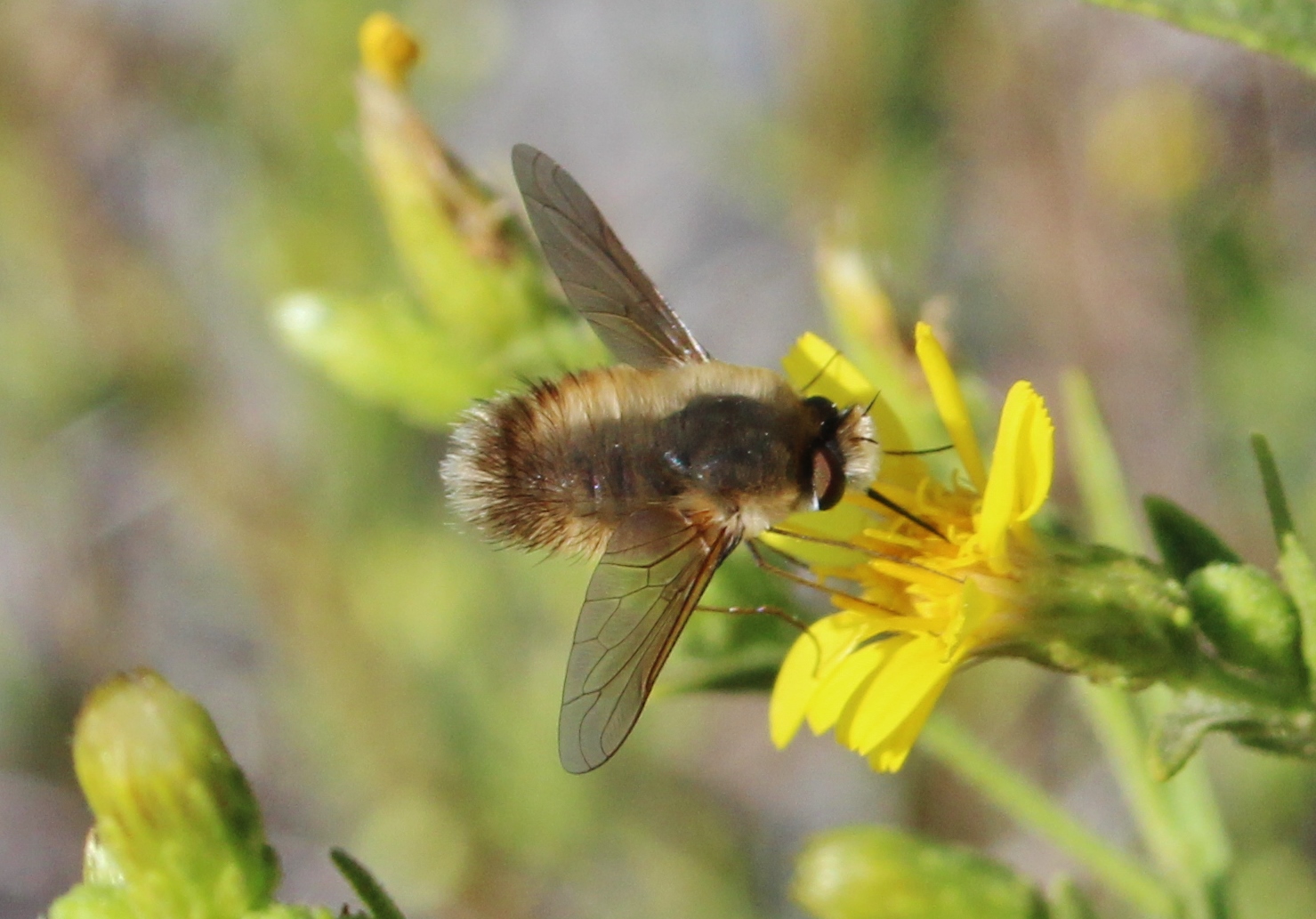
Οι φωτογραφίες της παρούσας καταγραφής λήφθηκαν στο Γέρι στις 31 Οκτωβρίου 2014, από τον George Konstantinou. Η καταγραφή αφορά Bombylius sp., δηλαδή ένα είδος του γένους που δεν έχει προσδιοριστεί σε επίπεδο είδους.
Το γένος έχει ευρεία παγκόσμια εξάπλωση, με σημαντική εκπροσώπηση στην Παλαιαρκτική περιοχή, στην οποία ανήκει η Κύπρος. Η συγκεκριμένη παρατήρηση τεκμηριώνει φθινοπωρινή παρουσία ενήλικου εντόμου στο Γέρι. Οι περίοδοι πτήσης διαφέρουν ανά είδος και περιοχή, επομένως δεν υπάρχει ένα ενιαίο εποχικό ημερολόγιο για ολόκληρο το γένος.
Στην κυπριακή πανίδα η ίδια οικογένεια εκπροσωπείται και από άλλες μελισσόμυγες, όπως το Anthrax sticticus, που έχει διαφορετική εμφάνιση και ανήκει σε άλλο γένος.
Μορφολογία και διάκριση από τις μέλισσες
Πολλά Bombylius έχουν συμπαγές σώμα με πυκνές τρίχες, μεγάλους σύνθετους οφθαλμούς και μακριά προβοσκίδα που προβάλλει μπροστά από την κεφαλή. Ο χρωματισμός των τριχών ποικίλλει και μπορεί να είναι υπόλευκος, κιτρινωπός, καστανός ή σκοτεινός. Οι πτέρυγες μπορεί να είναι διαφανείς ή να παρουσιάζουν σκούρες περιοχές και κηλίδες, ανάλογα με το είδος.
Διαθέτουν έξι πόδια και ένα ζεύγος πτερύγων πτήσης, σε αντίθεση με τις μέλισσες που έχουν δύο ζεύγη. Το δεύτερο ζεύγος πτερύγων των διπτέρων έχει μετατραπεί σε αλτήρες, όργανα που βοηθούν στην ισορροπία κατά την πτήση. Οι κεραίες είναι συνήθως κοντές και τα πόδια περισσότερο λεπτά από εκείνα των τριχωτών μελισσών που μιμούνται.
Η ομοιότητα με μέλισσες θεωρείται μορφή προστατευτικού μιμητισμού. Η ασφαλής αναγνώριση του είδους μπορεί να απαιτεί εξέταση της νεύρωσης των πτερύγων, της τριχοφυΐας, των κεραιών και άλλων διαγνωστικών χαρακτήρων. Η κοινή ονομασία bee-fly δεν αφορά αποκλειστικά το Bombylius, αλλά χρησιμοποιείται για την οικογένεια ευρύτερα.
Πτήση και ενδιαιτήματα
Οι ενήλικες μελισσόμυγες μπορούν να αιωρούνται και να αλλάζουν γρήγορα κατεύθυνση. Κατά τη διατροφή τους πλησιάζουν το άνθος με την προβοσκίδα προτεταμένη, διατηρώντας συχνά το σώμα στον αέρα ή στηριζόμενες ελαφρά με τα πρόσθια πόδια.
Οι ανάγκες τους περιλαμβάνουν τόσο διαθέσιμα άνθη όσο και κατάλληλες θέσεις αναπαραγωγής των ξενιστών. Γι’ αυτό οι ανθισμένες εκτάσεις και οι περιοχές με θέσεις φωλιάσματος εδαφόβιων μελισσών μπορούν να εξυπηρετούν διαφορετικές φάσεις της ζωής τους. Η σχέση αυτή δεν σημαίνει ότι κάθε είδος χρησιμοποιεί τα ίδια ενδιαιτήματα ή τους ίδιους ξενιστές.
Διατροφή και επικονίαση
Τα ενήλικα τρέφονται με νέκταρ, χρησιμοποιώντας τη μακριά προβοσκίδα για πρόσβαση στο εσωτερικό των ανθέων. Η γύρη αποτελεί επίσης σημαντικό διατροφικό πόρο για τις μελισσόμυγες, ιδιαίτερα για τα θηλυκά κατά την ανάπτυξη των αυγών.
Με τις διαδοχικές επισκέψεις μπορούν να μεταφέρουν γύρη μεταξύ ανθέων και να συμβάλλουν στην επικονίαση. Η αποτελεσματικότητα εξαρτάται από το είδος του εντόμου, τη μορφή του άνθους και την επαφή με τους ανθήρες και το στίγμα. Η επίσκεψη σε ένα άνθος δεν συνεπάγεται πάντοτε επιτυχή επικονίαση.
Δεν υπάρχει ένας κοινός φυτικός ξενιστής για το γένος: τα φυτά προσφέρουν κυρίως τροφή στα ενήλικα, ενώ οι προνύμφες συνδέονται με ζωικούς ξενιστές.
Αναπαραγωγή και απόθεση αυγών
Σε μελετημένα είδη Bombylius, τα θηλυκά αναζητούν εισόδους φωλιών μελισσών και αποθέτουν αυγά με χαρακτηριστικές κινήσεις της κοιλιάς, συχνά ενώ αιωρούνται. Τα αυγά εκτοξεύονται προς την είσοδο ή την περιοχή γύρω από αυτήν, αντί το θηλυκό να εισέρχεται υποχρεωτικά στη φωλιά.
Σε ορισμένα είδη έχει τεκμηριωθεί συλλογή λεπτών σωματιδίων εδάφους, με τα οποία καλύπτονται τα αυγά πριν από την απόθεσή τους. Η επιλογή θέσης και ξενιστή αποτελεί ουσιαστικό μέρος της αναπαραγωγικής συμπεριφοράς.
Προνύμφες και παρασιτοειδής κύκλος ζωής
Η ανάπτυξη περιλαμβάνει αυγό, προνύμφη, νύμφη και ενήλικο. Σε γνωστούς κύκλους ζωής του γένους, η νεοεκκολαφθείσα προνύμφη είναι κινητική και αναζητεί πρόσβαση στη φωλιά του ξενιστή. Τα μεταγενέστερα προνυμφικά στάδια έχουν διαφορετική μορφή και μικρότερη κινητικότητα, μια διαφοροποίηση γνωστή ως υπερμεταμόρφωση.
Κύριοι τεκμηριωμένοι ξενιστές είναι μέλισσες που φωλιάζουν στο έδαφος. Οι προνύμφες μπορούν να αξιοποιούν τροφικά αποθέματα της φωλιάς και στη συνέχεια να καταναλώνουν τον αναπτυσσόμενο ξενιστή. Ο όρος παρασιτοειδές δηλώνει ότι η ανάπτυξή τους καταλήγει στον θάνατό του.
Τα γνωστά δεδομένα συγκεκριμένων ειδών δεν επιτρέπουν να αποδοθεί ένας συγκεκριμένος ξενιστής στο φωτογραφημένο Bombylius sp. Η διάρκεια ανάπτυξης, η διαχείμαση και ο αριθμός γενεών εξαρτώνται επίσης από το είδος και τις συνθήκες.
Οικολογικός ρόλος και σχέση με τον άνθρωπο
Οι μελισσόμυγες συνδέουν δύο διαφορετικές οικολογικές σχέσεις: την επίσκεψη και επικονίαση ανθέων από τα ενήλικα και την παρασιτοειδή ανάπτυξη των προνυμφών. Η παρουσία τους εξαρτάται επομένως από την ύπαρξη τόσο φυτικών τροφικών πόρων όσο και κατάλληλων ζωικών ξενιστών.
Δεν τσιμπούν και δεν διαθέτουν κεντρί. Η μακριά προβοσκίδα είναι όργανο διατροφής, όχι όπλο ή όργανο αιμοληψίας. Ο παρασιτοειδής τρόπος ζωής των προνυμφών αφορά άλλα έντομα και δεν αποτελεί κίνδυνο για τον άνθρωπο.
Ταξινομία
Βασίλειο: Animalia
Φύλο: Arthropoda
Κλάση: Insecta
Τάξη: Diptera
Υποτάξη: Brachycera
Υπεροικογένεια: Asiloidea
Οικογένεια: Bombyliidae — περίπου 5.000 περιγεγραμμένα είδη παγκοσμίως.
Υποοικογένεια: Bombyliinae
Γένος: Bombylius Linnaeus, 1758 — περίπου 300 είδη· 286 στην αναθεωρημένη έκδοση του παγκόσμιου καταλόγου του 2015.
Είδος: Bombylius sp. — μη προσδιορισμένο είδος του γένους.
Πηγές
Bishop Museum — World Catalog of Bee Flies. hbs.bishopmuseum.org
Evenhuis & Greathead (2015) — Ποικιλότητα, ταξινόμηση και διατροφή των Bombyliidae. hbs.bishopmuseum.org
Natural History Museum — Μορφολογία, πτήση και κύκλος ζωής των μελισσόμυγων. Natural History Museum
Boesi, Polidori & Andrietti (2009) — Απόθεση αυγών και διατροφική συμπεριφορά σε τέσσερα είδη Bombylius. zoolstud.sinica.edu.tw
Kastinger & Weber (2001) — Bombylius και επικονίαση ανθέων. researchgate.net
Royal Entomological Society — Κλείδες αναγνώρισης και στοιχεία βιολογίας των Bombyliidae. royensoc.co.uk
Li et al. (2019) — Φυλογένεση και ταξινόμηση των Bombyliinae.


Bee-fly – Bombylius sp. – Cyprus
Text by George Konstantinou.
Photographs: George Konstantinou, Geri, 31 October 2014.
The genus Bombylius
Bombylius Linnaeus, 1758 is a genus of flies belonging to the family Bombyliidae. These insects are known as bee-flies because of their resemblance to bees and bumblebees. Despite their appearance, they are flies, with different morphology and a distinctive life cycle: adults visit flowers, while larvae develop in association with other insects.
The family Bombyliidae includes approximately 5,000 described species worldwide. Bombylius is one of its largest genera, with approximately 300 species; the revised 2015 edition of the world catalogue includes 286. These figures change through new descriptions and taxonomic revisions.
Occurrence in Cyprus
The photographs accompanying this record were taken in Geri on 31 October 2014 by George Konstantinou. The record concerns Bombylius sp., meaning a species of the genus that has not been identified to species level.
The genus has a broad worldwide distribution, with substantial representation in the Palaearctic region, which includes Cyprus. This observation documents an adult’s autumn occurrence in Geri. Flight periods differ between species and regions, so there is no single seasonal calendar for the entire genus.
The same family is represented in the Cypriot fauna by other bee-flies, including Anthrax sticticus, which has a different appearance and belongs to another genus.
Morphology and distinction from bees
Many Bombylius have a compact, densely hairy body, large compound eyes and a long proboscis projecting in front of the head. Hair colour varies and may be whitish, yellowish, brown or dark. Wings may be transparent or display dark areas and spots, depending on the species.
They have six legs and one pair of flight wings, unlike bees, which have two pairs. The second wing pair of flies has been modified into halteres, organs that help maintain balance during flight. Their antennae are usually short, and their legs are more slender than those of the hairy bees they resemble.
Their resemblance to bees is considered a form of protective mimicry. Reliable species identification may require examination of wing venation, hair covering, antennae and other diagnostic characters. The common name bee-fly is not exclusive to Bombylius but is used more broadly for the family.
Flight and habitats
Adult bee-flies can hover and change direction rapidly. During feeding, they approach a flower with the proboscis extended, often keeping their body airborne or lightly supporting themselves with their front legs.
Their requirements include both available flowers and suitable breeding sites for their hosts. Consequently, flowering areas and places where ground-nesting bees nest can serve different phases of their lives. This relationship does not mean that every species uses the same habitats or hosts.
Feeding and pollination
Adults feed on nectar, using their long proboscis to reach inside flowers. Pollen is also an important food resource for bee-flies, particularly females during egg development.
Through successive visits, they can transfer pollen between flowers and contribute to pollination. Their effectiveness depends on the insect species, flower structure and contact with the anthers and stigma. Visiting a flower does not always result in successful pollination.
There is no single plant host for the genus: plants mainly provide food for adults, whereas larvae are associated with animal hosts.
Reproduction and egg deposition
In studied Bombylius species, females search for bee nest entrances and deposit eggs through characteristic abdominal movements, often while hovering. Eggs are flicked towards the entrance or surrounding area, rather than the female necessarily entering the nest.
In certain species, the collection of fine soil particles has been documented; these coat the eggs before deposition. Selecting a location and host is an essential part of reproductive behaviour.
Larvae and the parasitoid life cycle
Development involves egg, larva, pupa and adult. In documented life cycles of the genus, the newly hatched larva is mobile and seeks access to the host’s nest. Later larval stages have a different form and reduced mobility, a differentiation known as hypermetamorphosis.
Principal documented hosts are ground-nesting bees. Larvae may use food provisions in the nest and subsequently consume the developing host. The term parasitoid indicates that their development ultimately results in the host’s death.
Information concerning particular species does not establish a specific host for the photographed Bombylius sp. Development time, overwintering and the number of generations also depend on the species and conditions.
Ecological role and relationship with humans
Bee-flies connect two different ecological relationships: flower visitation and pollination by adults, and parasitoid development by larvae. Their presence therefore depends on both plant food resources and suitable animal hosts.
They do not bite or possess a sting. The long proboscis is a feeding organ, not a weapon or a structure for blood feeding. The parasitoid lifestyle of the larvae concerns other insects and poses no danger to humans.
Taxonomy
Kingdom: Animalia
Phylum: Arthropoda
Class: Insecta
Order: Diptera
Suborder: Brachycera
Superfamily: Asiloidea
Family: Bombyliidae — approximately 5,000 described species worldwide.
Subfamily: Bombyliinae
Genus: Bombylius Linnaeus, 1758 — approximately 300 species; 286 in the revised 2015 edition of the world catalogue.
Species: Bombylius sp. — an undetermined species of the genus.
Sources
Bishop Museum — World Catalog of Bee Flies. hbs.bishopmuseum.org
Evenhuis & Greathead (2015) — Diversity, classification and feeding of Bombyliidae. hbs.bishopmuseum.org
Natural History Museum — Bee-fly morphology, flight and life cycle. Natural History Museum
Boesi, Polidori & Andrietti (2009) — Oviposition and feeding behaviour in four Bombylius species. zoolstud.sinica.edu.tw
Kastinger & Weber (2001) — Bombylius and flower pollination. researchgate.net
Royal Entomological Society — Identification keys and biological information on Bombyliidae. royensoc.co.uk
Li et al. (2019) — Phylogeny and classification of Bombyliinae.

