Translate

Friday, 22 September 2017

Cyprus Birding And Wildlife Tours Around Cyprus

Offering guided Cyprus Birding & Wildlife Tours full day and interesting Tours around Cyprus.

We offer private Cyprus Birding Tours & Wildlife Tours, (Nature safaris). We can set up custom watching  and photography tours all over Cyprus, exploring  its unique  biodiversity  with one of the most expert guides of the island

 We will provide you an informative entertaining, and interactive experience that will leave you with memories to last for a lifetime.

Half-day and full-day trips are offered in our comfortable 4x4 off road vehicles, in which we take our customers into some of the best and most secret areas in Cyprus. All the locations we will visit were found after many years of explorations and thousand of kilometers driven.

Experienced wildlife & Nature  guides (Xrysanthos Konstantinou and Michael Hadjiconstantis) will pick you up from  your hotel and bring you back at the end of our excursion.

We offer trips that are not prearranged they are tailor made to your interests.

As an example you could choose to visit and see the endemic Cyprus mouflons during our excursion we will choose and add  other interesting things to see on our way there.

Part of our tour is also to provide you with copies of photos of the wildlife and nature we will see in our trip in case you don't have your own equipment at no extra cost, 

Expert knowledge of Cyprus biodiversity, We can give you detail on all creatures plants we will see in our trip with their scientific names and full details,

Home made Sandwiches are offered during our trip,

Please contact us with your requirements and the specific needs that you may have, We will create trips that will focus on wildlife and nature viewing, We will  set up our excursion program the dates that you want upon our availabiliy,

Xrysanthos Konstantinou  is a son of George and Fani Konstantinou, master of Cyprus biodiversity   as he was growing up he was brought up appreciating nature and learning how to respect it and learned in detail about the birds, animals, plants, insects, reptiles, mammals of Cyprus.

Michael Hadjiconstantis studied about forestry and is a specialized  researcher for insects with unique  knowledge about the spiders of Cyprus, has excellent knowledge about the biodiversity of Cyprus. 

All the photos bellow, Links and videos are from our website and will give you a good idea of what we can arrange to see in our exursion,

Share our passion about nature and visit with us the best the wildlife moments that Cyprus can offer

We promise you that you will leave an unforgettable experience  with us and the best our island has to offer

Book it now with the best price.

Contact
We are your local contact that has the experience and the expertise to take you to the most remote and secret areas of Cyprus, if you want us to take you out and show you the wildlife & Nature of Cyprus please contact us for a lifetime experience.

Email: fanigeorge@hotmail.com

Twitter
https://twitter.com/WildlifeCyprus

Flickr
https://www.flickr.com/photos/158354696@N07/?

youtube

Biodiversity of Cyprus on youtube

Websites
1 Biodiversity of Cyprus by NGO Protection of the Natural Heritage and the Biodiversity of Cyprus

2 Reptiles and amphibians of Cyprus 

3 Mammals of Cyprus


The rich and rare biodiversity of Cyprus  includes 1950 plants(), 650 , 250   fishes, more than 6.000  , 409  including , 30  , 8  , 11 , three amphibians (),120 ,  estimated 5-8 thousandand and three , http://biodiversitycyprus.blogspot.com.cy/


The Cyprus  displays a great variety of styles. The coast has large open bays and precipitous cliffs and rocks. There are sandy beaches and shingle beaches. The precipitous mountains are mainly tree-covered to their peaks. The rest of the island is fertile hilly country.

Amazing  beaches

Amazing sunset - Cyprus in a Sunset View
See Five finger mountain
                                See Troodos mountain


 The  include a total of 409 species,  including  


Endemic birds  

Cyprus Warbler (Sylvia melanothorax) 


Cyprus has five Endemic Sub-Species of Bird

Important Bird Areas of Cyprus

Achna Dam - Larnaca Salt Lake - Fassouri Marsh - Kouklia dam - 

Kensington cliffs - Oroklini Lake - Cape Greco -  Cape Apostolos Andreas Cape Kormakitis - Larnaca Sewage Works Agios Loukas Lake at Ammochostos - Athalassa Lakes


Cyprus, one of the hotspots of Mediterranean biodiversity. The  comprises 1633 indigenous taxa (species and subspecies), 140  , 246 introduced taxa occuring in the wild, 48 hybrids and 85 species with unclear status.

List of Endemics plants of Cyprus

 50 species of 


Reptiles and amphibians
The Cyprus Reptiles includes 8 snakes, 11  lizards three amphibians (frogs)
 and three turtles

 8 species of Snakes 

The eight snakes of Cyprus

11 species of Lizards

The eleven lizards of Cyprus

3 species of Amphibians
 3 species of Turtles


 The Cyprus  includes 30 species
http://mammalscyprus.blogspot.com.cy/

19 species of Bats -  

Mediterranean monk seal (Monachus monachus)


Red fox (Vulpes vulpes)


More than 6.000 species of  


50 species of  Butterflys  

Beautiful Caterpillars

More than 1.000 species of Moths


Two endemic species of Scorpions 

Buthus kunti - Mesobuthus cyprius 


A hundreds species of spiders
 of Cyprus

More than 120 species of land Snails 
 of Cyprus

Fungi estimated 5-8 thousandand species


More than 250 species of marine fishes


More than 650 species of sea shells
 - 

Cyprus prehistoric biodiversity (Fossils)
Fossils can only be seen no collection and digging is allowed by local regulations and laws. 

Fossils of Cyprus dwarf elephant (Palaeoloxodon cypriotes)


One of our vehicles in action


Contact
We are your local contact that has the experience and the expertise to take you to the most remote and secret areas of Cyprus, if you want us to take you out and show you the wildlife & Nature of Cyprus please contact us for a lifetime experience.

Email: fanigeorge@hotmail.com


Tuesday, 18 July 2017

Red crossbill - Loxia curvirostra Linnaeus, 1758 - Σταυρομύτης - Cyprus


The red crossbill (Loxia curvirostra) is a small passerine bird in the finch family Fringillidae, also known as the common crossbill in Eurasia. Crossbills have distinctive mandibles, crossed at the tips, which enable them to extract seeds from conifer cones and other fruits.

Adults are often brightly coloured, with red or orange males and green or yellow females, but there is wide variation in colour, beak size and shape, and call types, leading to different classifications of variants, some of which have been named as subspecies.

Crossbills are characterized by the mandibles crossing at their tips, which gives the group its English name. Using their crossed mandibles for leverage, crossbills are able to efficiently separate the scales of conifer cones and extract the seeds on which they feed. Adult males tend to be red or orange in colour, and females green or yellow, but there is much variation.

In North America, nine distinct red crossbill variants (referred to as call types) differing in vocalizations as well as beak size and shape are recognized. Each call type evolved to specialize on different species of conifer.

The red crossbill breeds in the spruce forests of North America, as well as Europe and Asia. Some populations breed in pine forests in certain areas of all three continents, and in North America, also in Douglas-fir. It nests in conifers, laying 3–5 eggs.

This crossbill is mainly resident, but often irrupts south when its food source fails. These irruptions led in the twentieth century to the establishment of permanent breeding colonies in England, and more recently in Ireland. This species forms flocks outside the breeding season, often mixed with other crossbills.

The first known irruption, recorded in England by the chronicler Matthew Paris, was in 1254; the next, also in England, appears to have been in 1593 (by which time the earlier irruption had apparently been entirely forgotten, since the crossbills were described as "unknown" in England). The engraver Thomas Bewick wrote that "It sometimes is met with in great numbers in this country, but its visits are not regular", adding that many hundreds arrived in 1821. Bewick then cites Matthew Paris as writing "In 1254, in the fruit season, certain wonderful birds, which had never before been seen in England, appeared, chiefly in the orchards. They were a little bigger than Larks, and eat the pippins of the apples [pomorum grana] but no other part of them... They had the parts of the beak crossed [cancellatas] by which they divided the apples as with a forceps or knife. The parts of the apples which they left were as if they had been infected with poison." Bewick further records an account by Sir Roger Twysden for the Additions to the Additamenta of Matt. Paris "that in the apple season of 1593, an immense multitude of unknown birds came into England ... swallowing nothing but the pippins, [granella ipsa sive acinos] and for the purpose of dividing the apple, their beaks were admirably adapted by nature, for they turn back, and strike one point upon the other, so as to show ... the transverse sickles, one turned past the other.
From https://en.wikipedia.org/wiki/Red_crossbill

Photos and videos Troodos by George Konstantinou


Thursday, 13 July 2017

Solen strigilatus - Solecurtus strigilatus (Linnaeus, 1758) - Cyprus

Family Solecurtidae

Solecurtus strigilatus, also known as the rosy razor clam, is a species of saltwater clam, a marine bivalve mollusc in the family Solecurtidae. This mollusc is a suspension feeder and can burrow with great rapidity to escape predators. It is an unusual bivalve in that its shell valves are too small to contain all the soft tissue, and the animal is unable to retreat into its shell.
Description
The valves of the rosy razor clam are relatively small, thin and finely sculptured. At the anterior end of the animal there is a strong, protruding foot. At the posterior end, is the large mantle sac containing the gills; when relaxed, it protrudes and is twice the length of the valves, but it can be contracted back between the valves. Posterior to this are the two robust, contractile siphons. The maximum length of the shell is 8 cm (3 in).
Distribution
The rosy razor clam occurs in the Mediterranean Sea and the adjoining part of the Atlantic Ocean. It is present from the lower shore down to the shallow sublittoral zone. From Wikipedia, the free encyclopedia

Underwater photos  by Kostas Aristeidou


Eurasian wren (Troglodytes troglodytes) Τρυποφράχτης - Cyprus

Monday, 10 July 2017

Axillary seabream - Pagellus acarne - (μουσμούλια ή φατσούκλια) - Cyprus


Pagellus is a genus of porgies in the family Sparidae.

Underwater photos at Akamas by Kostas Aristeidou


Sunday, 9 July 2017

Εφημερίδα πολίτης 9/7/2017 - Ο βίος και η πολιτεία του φυσιοδίφη - ερευνητή Γιώργου Κωνσταντίνου


Αναξιοποίητο διαμάντι - Ο φυσιοδίφης Γιώργος Κωνσταντίνου στον «Π»

ΠΑΥΛΟΣ ΝΕΟΦΥΤΟΥ, 10.07.2017 1 Comment
Ξαφνικά η κουλουριασμένη φίνα ανασηκώνεται και καταφέρνει ένα αστραπιαίο δάγκωμα στον φακό του, ενώ την κινηματογραφούσε.

Μεσημέρι Δευτέρας στο Γέρι. Η θερμοκρασία στους 41˚C και ο ανεμιστήρας απέναντί μας να δουλεύει ασταμάτητα. Γύρω μας, σε γυάλινες προθήκες στους τοίχους του σαλονιού, ορθώνεται μια αυτοκρατορία από όστρακα. Καθόμαστε μπροστά από τον υπολογιστή και χαζεύουμε τους ήρωες των ντοκιμαντέρ του: τις δύο φώκιες που πέτυχε στη Γιαλούσα, το σμήνος των τεσσάρων γυπών στον κόλπο Επισκοπής, μικρές κουκουβάγιες να τρέφονται τη νύχτα με σαύρες, μια υγρή μέρα με περίεργα κοιτάγματα αγρινών, την αετογερακίνα να διατηρεί το περήφανο άπλωμα των φτερών, ακολούθως η φίνα που τινάζεται μέσα στο νερό του ποταμού.
«Το φίδι είναι έξυπνο ζώο;», ρωτώ τον Γιώργο Κωνσταντίνου.
«Είναι, αλλά περισσότερο λειτουργεί βάσει ενστίκτου».
«Ποιο ζώο είναι πολύ έξυπνο;»
«Οι αλεπούδες κυρίως είναι πολύ έξυπνες. Φαντάσου πόσο δύσκολο είναι να τραβήξεις 10 λεπτά βίντεο με αλεπούδες. Πλησιάζονται πολύ δύσκολα, σε παίρνουν είδηση, σε μυρίζονται».
«Δάγκωμα» φίνας
Ξαφνικά η κουλουριασμένη μπεζ φίνα που συνάντησε στον κορμό του δέντρου νιώθει να απειλείται, σέρνεται ελάχιστα, ανασηκώνεται και καταφέρνει ένα αστραπιαίο δάγκωμα στον φακό του, ενώ κινηματογραφούσε.
Και όμως, για τον ίδιο το συγκεκριμένο δάγκωμα είναι τόσο αθώο σε σύγκριση με αυτό που νιώθει να του έχουν καταφέρει δημόσιοι και ιδιωτικοί φορείς: πάνω από 650 ντοκιμαντέρ για την κυπριακή βιοποικιλότητα, χιλιάδες φωτογραφίες και άλλα τόσα κινηματογραφικά πλάνα, συνεχίζουν να παραμένουν αναξιοποίητα από το κράτος και τους ιδιωτικούς φορείς, στους οποίους κάθε τόσο απευθύνεται. Είναι το προϊόν πείρας 50 χρόνων επαφής με τη βιοποικιλότητα, από έναν άνθρωπο που γνωρίζει πού να βρει και πώς να προσεγγίσει το κάθε τι, σε οποιοδήποτε μέρος της Κύπρου, οποιαδήποτε ώρα και όσο χρειαστεί. Εξάλλου για τον μικρό κύκλο των φυσιοδιφών και ερευνητών της βιοποικιλότητας, ο Γιώργος Κωνσταντίνου είναι ό,τι καλύτερο έχει η Κύπρος στην έρευνα απολιθωμάτων.

Τους έκοψαν κάθε στήριξη
Όπως αναφέρει στον «Π» ο κ. Κωνσταντίνου, ο σύνδεσμος στον οποίο είναι πρόεδρος, ο Σύνδεσμος Προστασίας Φυσικής Κληρονομιάς και Βιοποικιλότητας της Κύπρου, λάμβανε κάποιες χορηγίες πριν την οικονομική κρίση, με αποτέλεσμα να γίνονται κάποιες εκδηλώσεις, όπως εκθέσεις φωτογραφίας ή απολιθωμάτων και συνέδρια. Κατόπιν όλα αυτά εξανεμίστηκαν και ο μοναδικός τρόπος προβολής της βιοποικιλότητας παραμένει το διαδίκτυο.
Αν και έχει αποταθεί σε διάφορους φορείς, δημόσιους και μη, για αξιοποίηση των ταινιών και των φωτογραφιών του, ο κ. Κωνσταντίνου συνάντησε μόνο πόρτες κλειστές. «Εκτός από τα ολοκληρωμένα ντοκιμαντέρ, που είναι πάνω από 650, έχω τραβήξει άλλες χιλιάδες βίντεο για την κυπριακή βιοποικιλότητα», λέει, «ένα υλικό με το οποίο θα μπορούσαν να γίνουν δεκάδες ντοκιμαντέρ για την κυπριακή φύση (για τα ερπετά της Κύπρου, τις χελώνες, τα έντομα, τα φυτά, τα θηλαστικά, τα αποδημητικά πουλιά κ.λπ.)». «Παρόλα αυτά», σημειώνει, «δεν ενδιαφέρεται κανένας».


Μέχρι να ολοκληρωθεί ένα ντοκιμαντέρ
«Η διαδικασία για να γίνει ένα ντοκιμαντέρ», σημειώνει ο κ. Κωνσταντίνου «εμπεριέχει κόπο αφάνταστο». Όπως αναφέρει, μπορεί να χρειαστεί να περιμένει ώρες ατέλειωτες σε κάποιο σημείο ή και μέρες, προκειμένου να αποσπάσει τα πλάνα που χρειάζονται. Να είναι απαρατήρητος, τολμηρός και ασφαλώς υπομονετικός, αναλόγως του είδους πανίδας που θα αποτελέσει θέμα έρευνας. Δεν ήταν λίγες οι φορές που χρειάστηκε να διανυκτερεύσει έξω στο ύπαιθρο για τις ανάγκες του έργου του.
Στη συνέχεια, εξηγεί, ακολουθεί η δουλειά στο σπίτι με το μοντάζ. «Δουλεύω πάνω από 15 ώρες την ημέρα, είτε με τις ταινίες είτε με τις φωτογραφίες ή τις ιστοσελίδες και όλα αυτά αφιλοκερδώς», αναφέρει, εκτιμώντας πως όλη αυτή τη δουλειά εάν αναλάμβανε να την κάνει η επίσημη πολιτεία θα χρειάζονταν κάποια εκατομμύρια, μιας και θα έπρεπε να την αναθέσει σε βιολόγους, βοτανολόγους, εντομολόγους, ιχθυολόγους, ερπετολόγους κ.λπ. Όλα αυτά τα κάνει μόνος του, έχοντας αποκομίσει εδώ και πέντε δεκαετίες γνώσεις εμπειρικές, έχοντας μελετήσει και συζητήσει με επιστήμονες του εσωτερικού και του εξωτερικού. Ακόμα και για έρευνες άλλων, όπως επιστημόνων από άλλες χώρες, δεν είναι λίγες οι φορές που αναλαμβάνει τον ρόλο του οδηγού και του ειδικού που θα τους κατατοπίσει.

Με NATIONAL GEOGRAPHIC και DISCOVERY CHANNEL
Στην απογοήτευσή του για την κυπριακή πραγματικότητα, ήρθε πρόσφατα να προστεθεί και η αντιμετώπιση που είχε από τους διεθνείς κολοσσούς των ντοκιμαντέρ για την παγκόσμια βιοποικιλότητα, τους NATIONAL GEOGRAPHIC και DISCOVERY CHANNEL, οι οποίοι, σημειωτέον, επικοινώνησαν από δική τους πρωτοβουλία μαζί του και ενδιαφέρθηκαν για τη δουλειά του. «Πριν μερικούς μήνες», αφηγείται ο κ. Κωνσταντίνου, «επικοινώνησε μαζί μου το NATIONAL GEOGRAPHIC, ζητώντας μου ορισμένες κινηματογραφικές σκηνές για τη φίνα. Όταν όμως τους ανέφερα ότι πρέπει να πληρώσουν για να τις πάρουν, τότε μου ανέφεραν ότι δεν ενδιαφέρονται». Μετά από έναν μήνα συνέβη το ίδιο και με το DISCOVERY CHANNEL. «Πώς γίνεται εταιρείες εκατομμυρίων να θέλουν δωρεάν από εμένα;», διερωτάται προβληματισμένος ο κ. Κωνσταντίνου.


Βιβλία που δεν μπορούν να εκδοθούν
Ο Γιώργος Κωνσταντίνου έχει γράψει ένα βιβλίο, 350 σελίδες, για τα σαλιγκάρια της Κύπρου (είναι γύρω στα 120 είδη στο νησί, μαζί με αυτά του γλυκού νερού, όπως μας πληροφορεί). Ένα θέμα για το οποίο -τουλάχιστον σε τέτοια έκταση- δεν έχει γραφτεί κάτι μέχρι σήμερα. Κι όμως, δεν υπάρχουν τα χρήματα για να εκδοθεί. «Θα μπορούσα με τις φωτογραφίες που έχω να γράψω και άλλα βιβλία, αλλά δεν υπάρχουν τα χρήματα», προσθέτει.
Ανακάλυψε νάνο ελέφαντα
Την ίδια ώρα ο ίδιος συμβάλλει στην εκπόνηση μελετών για φοιτητές και καθηγητές πανεπιστημίων, τόσο στο εσωτερικό όσο και στο εξωτερικό. Μια από αυτές αφορούσε καθηγητές πανεπιστημίου του εξωτερικού για την ανακάλυψη νάνου ελέφαντα που προϋπήρχε του γνωστού νάνου ελέφαντα της Κύπρου -ο γνωστός ζύγιζε 200-250 κg, ενώ αυτός που ανακαλύφθηκε γύρω στα 600 kg. Το τραγικό της υπόθεσης είναι ότι ο ίδιος και η ομάδα του συνδέσμου ανακάλυψαν τα απολιθώματα του συγκεκριμένου είδους, το 2010 στην περιοχή Ξυλοφάγου. Επίσης οι ίδιοι, με δικά τους έξοδα, έφεραν τους επιστήμονες στην Κύπρο. Το αποτέλεσμα ήταν οι επιστήμονες να εκπονήσουν μια μελέτη όπου μέσα αγνοείται ο σύνδεσμος και η συνεισφορά του.

Μπορείτε να βρείτε ντοκιμαντέρ και φωτογραφίες του Γιώργου Κωνσταντίνου στις εξής ιστοσελίδες:
http://biodiversitycyprus.blogspot.com.cy
http://reptilescyprus.blogspot.com.cy
http://mammalscyprus.blogspot.com.cy

Και στο κανάλι στο youtube:
https://www.youtube.com/channel/UCBROBxegNh2NuXbYvOXu_zQ/videos


Thursday, 29 June 2017

Εκπομπή στον ASTRA " Φίδια της Κύπρου " Με τον Γιώργο Κωνσταντίνου - 29 06 2017


29//6/2017

Εκπομπή στον ASTRA 92,8 και 105,3 την Πέμπτη  29 6 2017, λίγο μετά τις 9:00 με την Σόνια Φιλίππου !!! Το θέμα μας θα είναι  " Φίδια της Κύπρου "  που θα μας το αναπτύξει ο φιλοξενούμενος μας Κος Γιώργος Κωνσταντίνου ειδικός Φυσιοδίφης , ερευνητής βιοποικιλότητας και φωτογράφος και κινηματογραφιστής ‘άγριας ζωής και πρόεδρος του συνδέσμου προστασίας φυσικής κληρονομιάς και βιοποικιλότητας της Κύπρου.


Monday, 26 June 2017

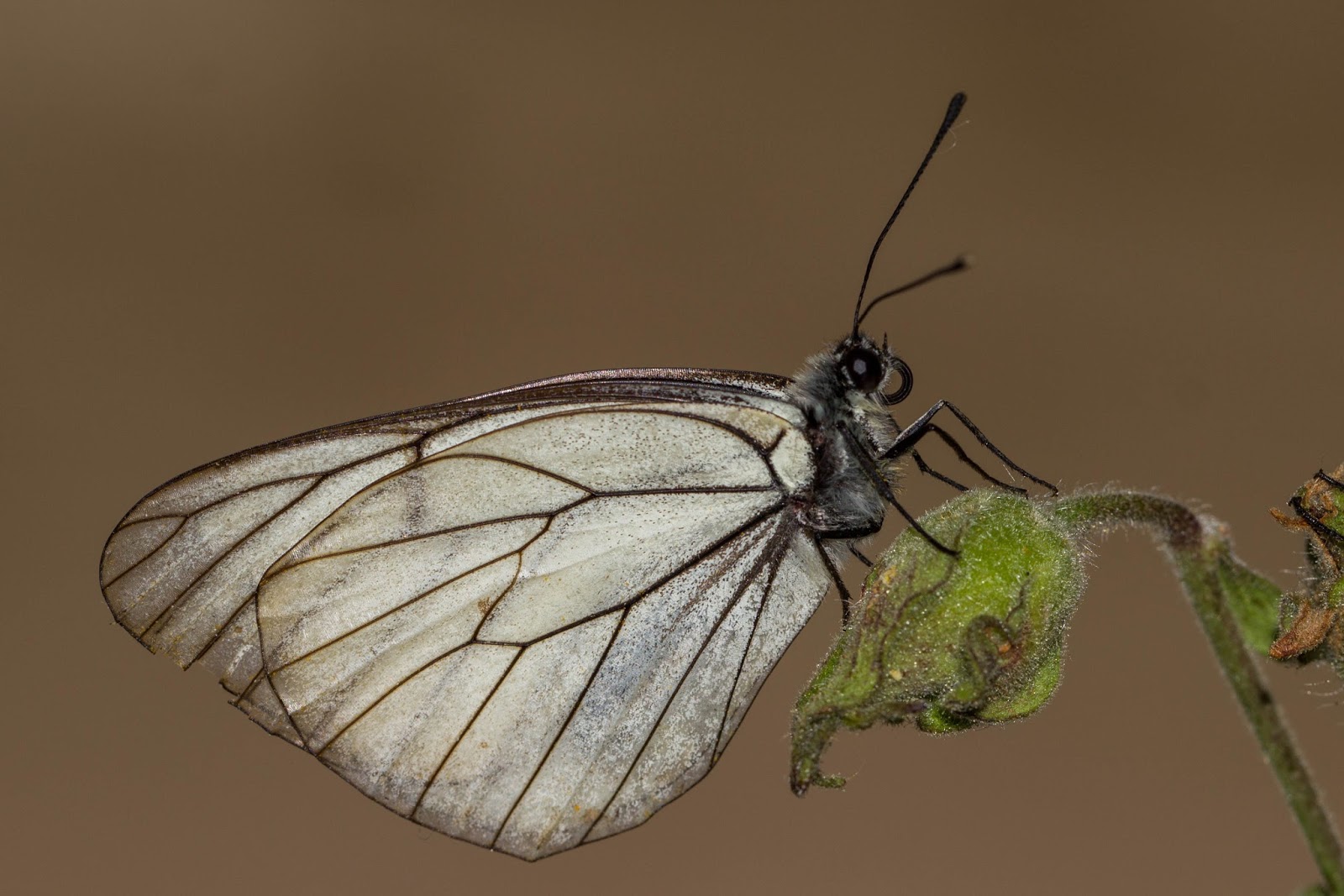
Aporia crataegi (Linnaeus, 1758) - The black-veined white - Cyprus

Family Pieridae

Aporia crataegi, the black-veined white, is a large butterfly of the family Pieridae.

Distribution and habitat
It occurs in open forest, grazing land, orchards. lanes, gardens, meadows and thickets throughout most of Europe, temperate Asia, Korea, and Japan. It is normally found at altitudes of 500 to 2,000 metres (1,600 to 6,600 ft). This species is extinct in the British Isles. In Cyprus Aporia crataegi is very rare and can be seen at few localities.

Description
The black-veined white has a wingspan of 51 to 70 mm (2.0 to 2.8 in). Females are commonly larger than males. The upperside of both forewings and hindwings is a translucent white boldly veined with black. The underside is similar in the male but the female has brown veining. Moreover, the female loses most of her scales by rubbing her wings together, resulting almost-transparent.

This butterfly can be distinguished from other members of white butterflies of the genus Pieris by its distinctive veined wings.

The eggs are yellow at first, darkening with age. The caterpillars are greenish grey with transverse banding. The pupa is creamy white, marked with black, attached by a silken girdle to a twig.

Biology
The flight period of the black-veined white is between April and July. The adults are quite social and their abundance varies greatly from year to year. The eggs are laid on the food plant, usually a member of the rose family Rosaceae and often on trees and bushes (Malus domestica, Malus micromalus, Pyrus communis, Pyrus serotina, Sorbus intermedia, Sorbus hybrida, Sorbus aucuparia, Crataegus monogyna, Crataegus oxyacantha, Crataegus jozana, Prunus spinosa, Prunus padus, Prunus ssiori, Betula spp., Salix phylicifolia, Chaenomeles lagenaria).

The eggs are laid in groups of 30 to 100. They take about three weeks to hatch. The caterpillars tend to remain in a group with a communal larval web. This species has one generation each year. The caterpillars overwinter communally in a webbing tent with entwined leaves. Caterpillars feed close together on the leaves of the food plant at first, before dispersing in the later developmental stages to other parts of the tree. The pupal stage lasts about three weeks. Info from https://en.wikipedia.org/wiki/Aporia_crataegi

See also - List of butterflys of Cyprus - Λίστα των πεταλούδων της Κύπρου


Photos by Michael Hadjiconstantis at Troodos, Jun 2017.